
So you’ve stood shoulder to shoulder with the fellow crowds of tourists from all over the world, tilting your heads up in unison to feast your eyes on the frescoes of the Sistine Chapel, that spectacular display of color and muscular bodies painted by Michelangelo some five hundred years ago. And you’ve made laps around the ancient Colosseum, the Forum, and magnificent arches, tracing the same steps of those mighty Roman legion soldiers from 1,700 years ago.
The Pantheon, St. Peter’s Basilica, the Galleria Borghese… Rome is a riveting encounter with history and art, emperors and popes. Not to mention the food is pretty good, too. If it’s your first time in the Eternal City, you should absolutely put up with the crowds and experience these landmarks that are (rightfully so) in every travel guide ever written about Rome.
But maybe you need a break from all that, and want to experience some places and sights that are more laid back, less crowded, and just as rewarding. A city as big as Rome is teeming with hidden treasures that are tucked away in charming, cobble-stone alleys and hidden behind towering trees and crumbling, ancient walls. One needs only an open afternoon and a curious mind.
Here are 5 hidden gems in Rome that offer much reprieve from the crowds and leave you feeling like an insider in one of the oldest cities in the world.
1. The Oratorio del Gonfalone
Via del Gonfalone, 32, 00186 Roma RM, Italy
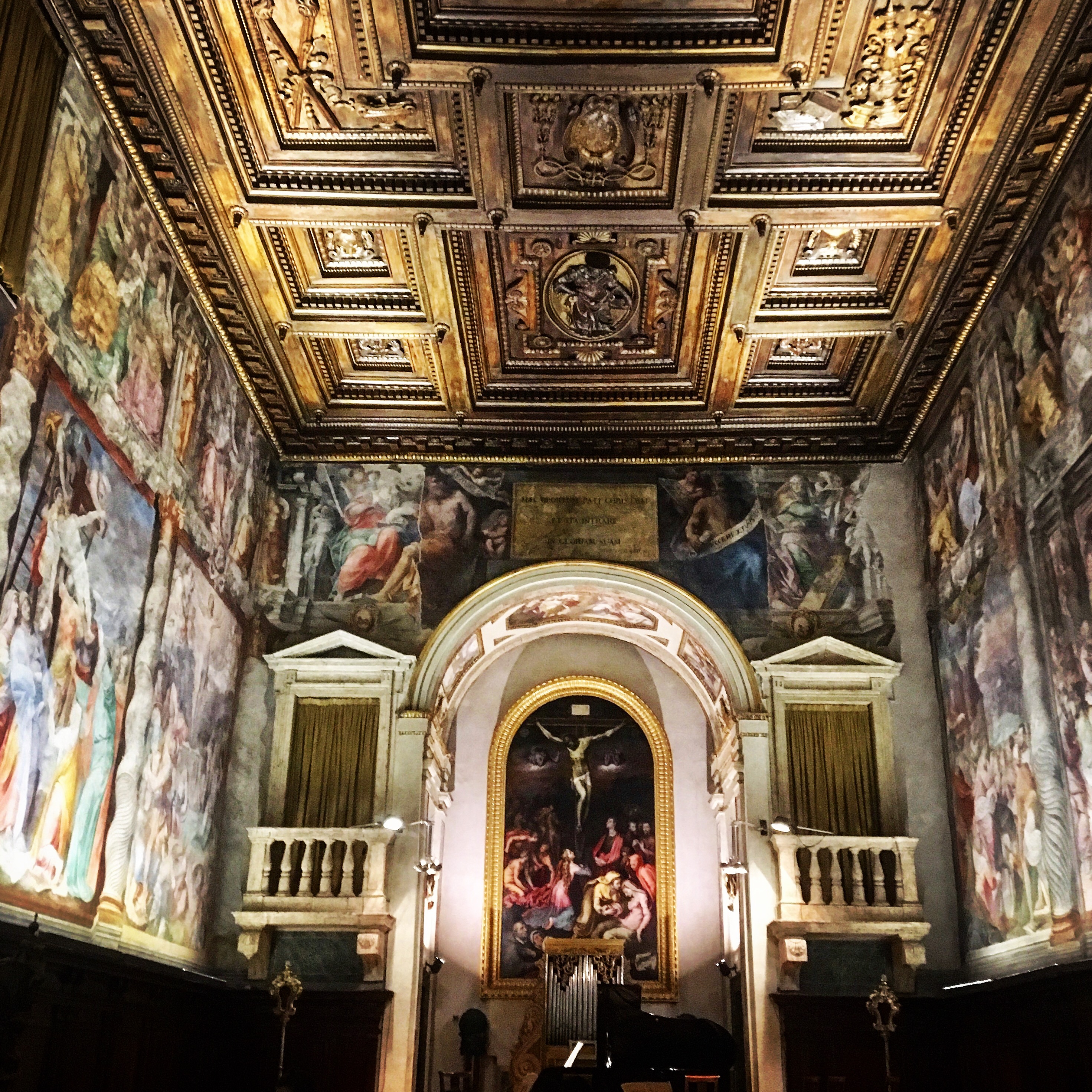
Around the corner from the historic street of Via Giulia sits a small church-turned-concert hall that puts on intimate music performances surrounded by a spectacular display of art. The church served as the home of the Accomandati di Madonna Santa Maria, a Catholic fraternity founded in 1264 devoted to serving the poor and putting on religious plays and processions (gonfalone means banner). The order was dissolved in the 19th century, but its former home still rings with music performances that are easily accessible to the public. While live music being performed in an intimate setting is delightful enough, it’s what’s inside the building – on the walls, on the ceiling – that’s the star of this location.
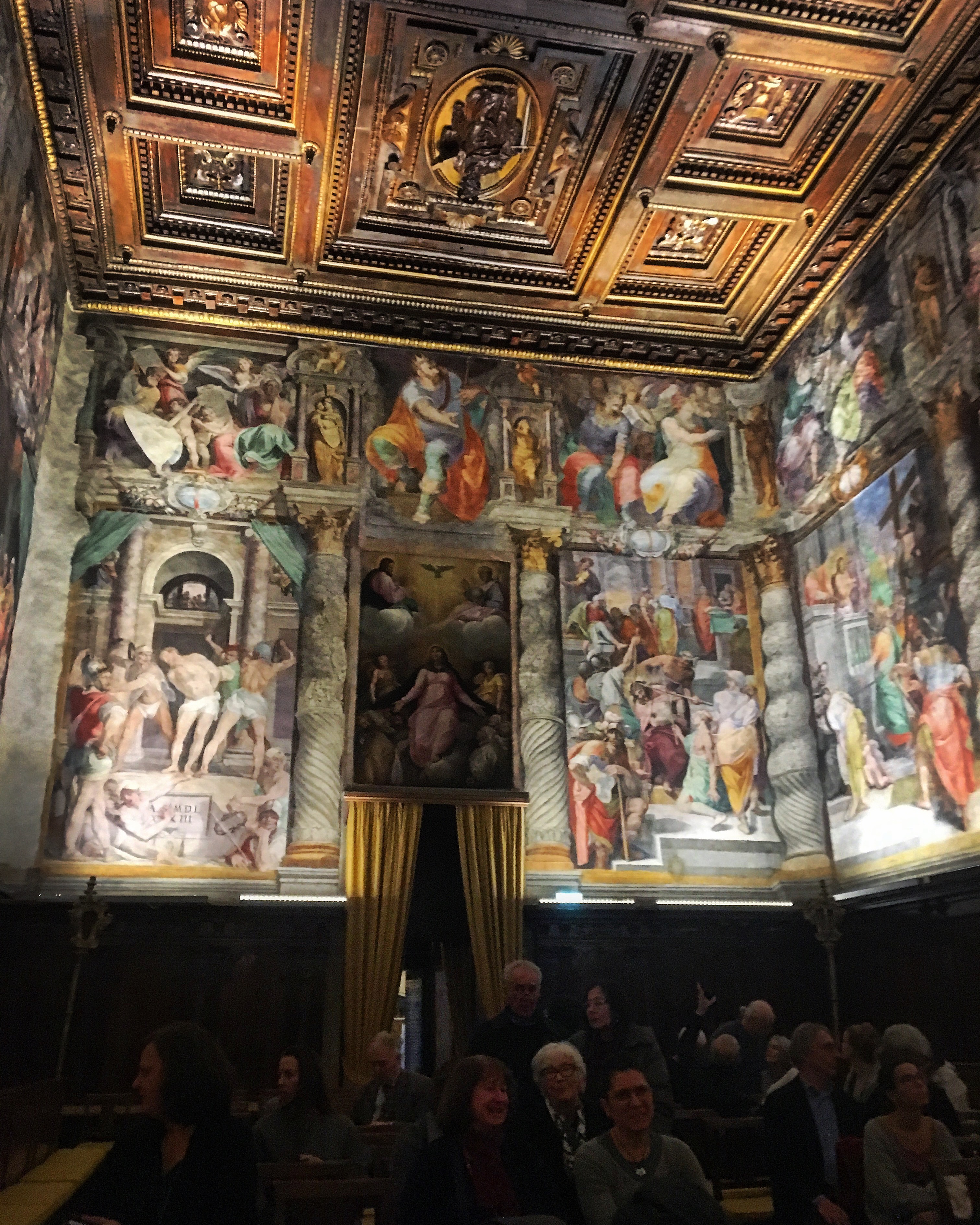
Covered in hand-painted frescoes from the 16th century, the Oratorio del Gonfalone has been called the “Sistine Chapel of Mannerism,” and for good reason, too. The scenes – depicting the Passion of Christ – envelop you as soon as you pass through the heavy, draped curtains that separate the interior space from the lobby by the front door. The colors are vivid and bright, thanks in part to a relatively recent restoration, and the figures are languid and dramatic, telling a loud story without making a sound.

The ceiling itself is quite different from the one in the Sistine Chapel, but on its own terms, impressive nonetheless. It’s composed of carved and gilded wood, with depictions of the Virgin Mary and the disciples Paul and Peter, executed in 1568 by Ambrogio Bonazzini.
This hidden treasure, quite literally in the middle of the city, is only accessible by attending one of their concert performances. Such a heavy dose of culture may seem intimidating (or thrilling), depending on your interests, but rest assured just around the corner, on the aforementioned Via Giulia, you’ll find a trove of bustling wine bars, restaurants, and a buzzing nightlife full of energy.
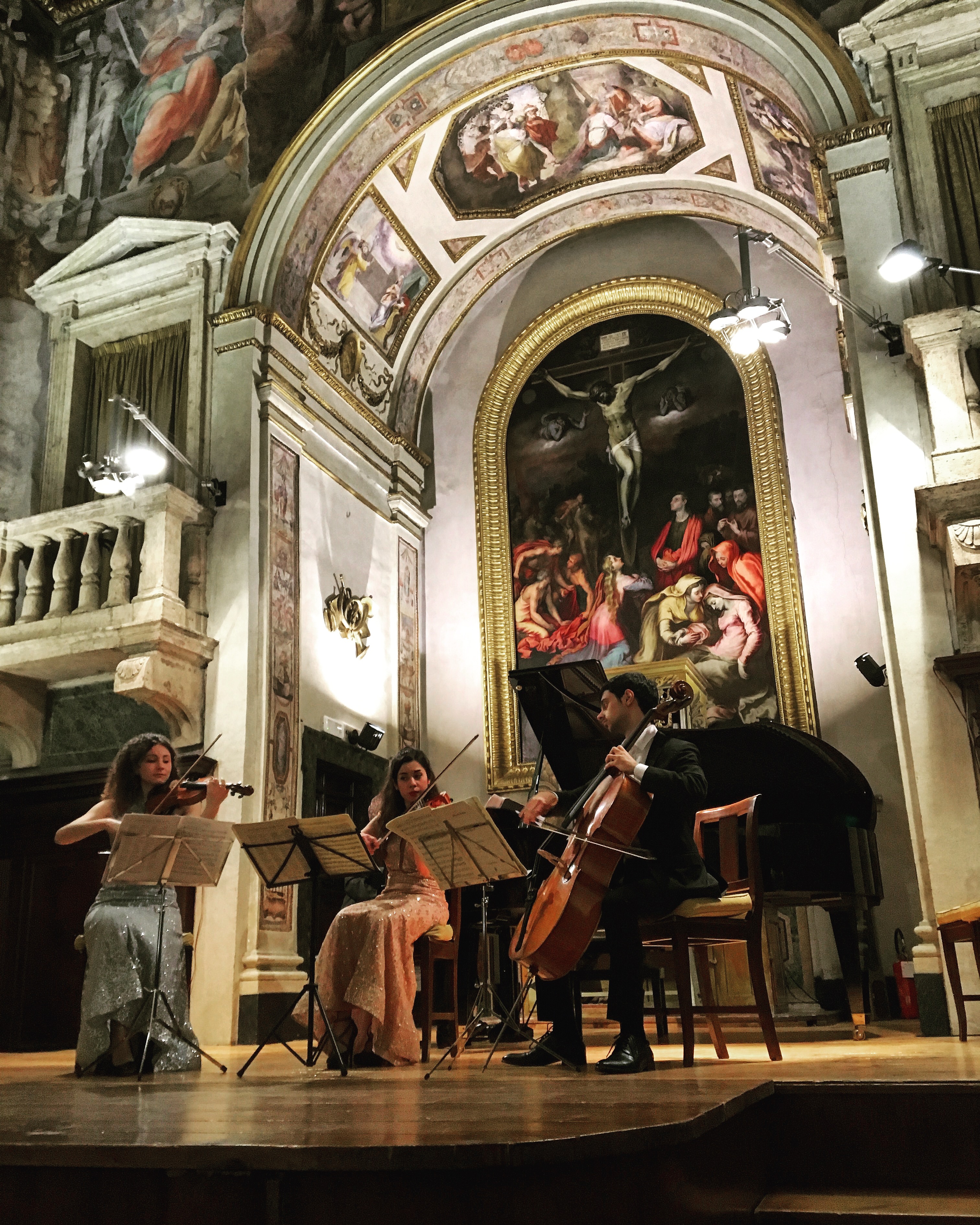
On the last night of my most recent stay in Rome, I cozied up in a wine bar around the corner and then took in a performance of Mozart and Bach compositions by a local Roman quartet. I think I stared at the ceiling and walls as much as the musicians and when I had to venture to the restroom below, I found a solemn former dining hall for monks covered in cold marble and lined with portraits upon portraits of popes. Let’s just say the wine I had before the performance added to the mystery of it all.
The Oratorio del Gonfalone has weekly performances and ticket reservations can be made via their website. You can pay for your reserved ticket when you arrive for the performance and, as of last February, only with cash.
2. The Hendrik Christian Andersen Museum
Via Pasquale Stanislao Mancini, 20, 00196 Roma RM, Italy
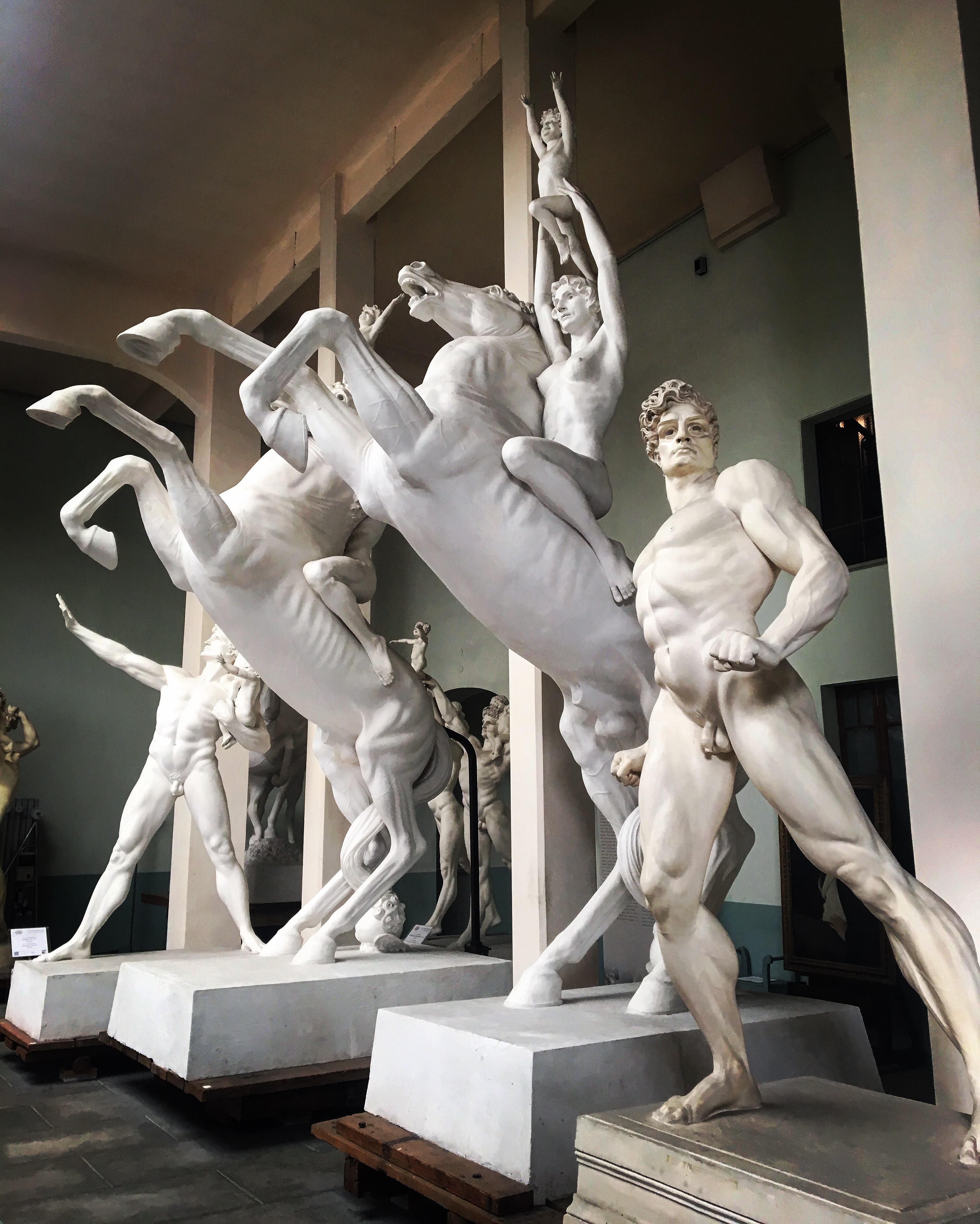
Up north along the Tiber and away from the main sights and piazzas, you can find an artist’s studio-turned-museum that gives you not only some air-conditioned rest from all that walking you’re doing, but more interestingly an opportunity to step inside the past and mind of a turn-of-the-century expatriate artist.
Hendrik Christian Andersen was an ambitious, if not eccentric, Norwegian-American sculptor who, like his artistic peers of the Gilded Age, ventured to Europe in search of truth, beauty, freedom, and love. He seemed to have found it all in Rome and he settled there just before the end of the 19th century, setting up a studio near the Tiber just north of the massive Piazza del Popolo. Inspired by the iconography of ancient Rome and the Renaissance masters, Andersen endeavored to interpret his feelings for art and the world in monumental pieces of classically-inspired figures and symbols. He was obsessed with the idea of art saving humanity, and even wrote personal manifestos supporting his vision for creating a “World City” that would foster and nurture society with its creative values.
[The World City would be] a fountain of overflowing knowledge to be fed by the whole world of human endeavor in art, science, religion, commerce, industry, and law; and in turn to diffuse throughout the whole of humanity as though it were one grand, divine body conceived by God, the vital requirements which would renew its strength, protect its rights, and enable it to attain greater heights through a concentration of world effort.
Hendrik Christian Andersen
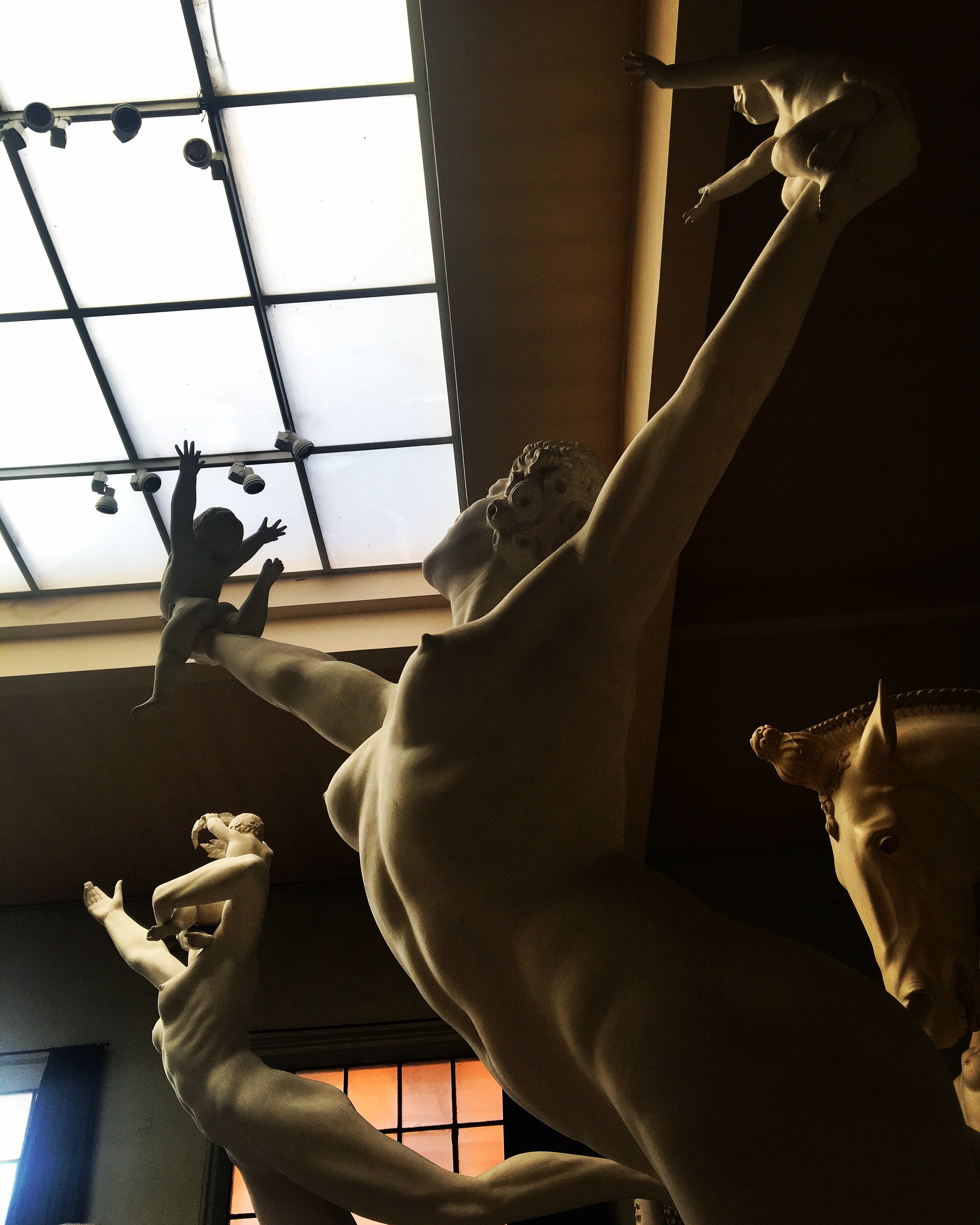
Walking into his studio is an overwhelming experience for the eyes: two spacious ground floor rooms are filled – cluttered, even – with massive statues frozen in action, and rising high above your head. Amazonian women proudly raising infants up to the heavens, horses standing powerfully in mid-rear, muscular figures frozen in an intimate embrace – it’s as if you’re wandering through Andersen’s mind, which is filled with massive plaster representations of the lofty values he enthusiastically endorsed.

Tucking into this little trove of eccentric treasures won’t cost you anything; admission is free. There are rooms above that host changing exhibitions, as well. You can visit the Hendrik Christian Andersen Museum every day except Monday, from 9:30AM – 7:30PM.
3. The Protestant Cemetery
Via Caio Cestio, 6, 00153 Roma RM, Italy

It might make one in love with death, to be buried in so sweet a place.
Percy Bysshe Shelley
I can say without a doubt that my favorite place in all of Rome is the Protestant Cemetery. More than any temple, ruin, basilica or museum, this plot of land filled with pine and cypress trees, daisies, and violets speaks to my soul and is the first place I make an effort to get to each time I visit this grand city.
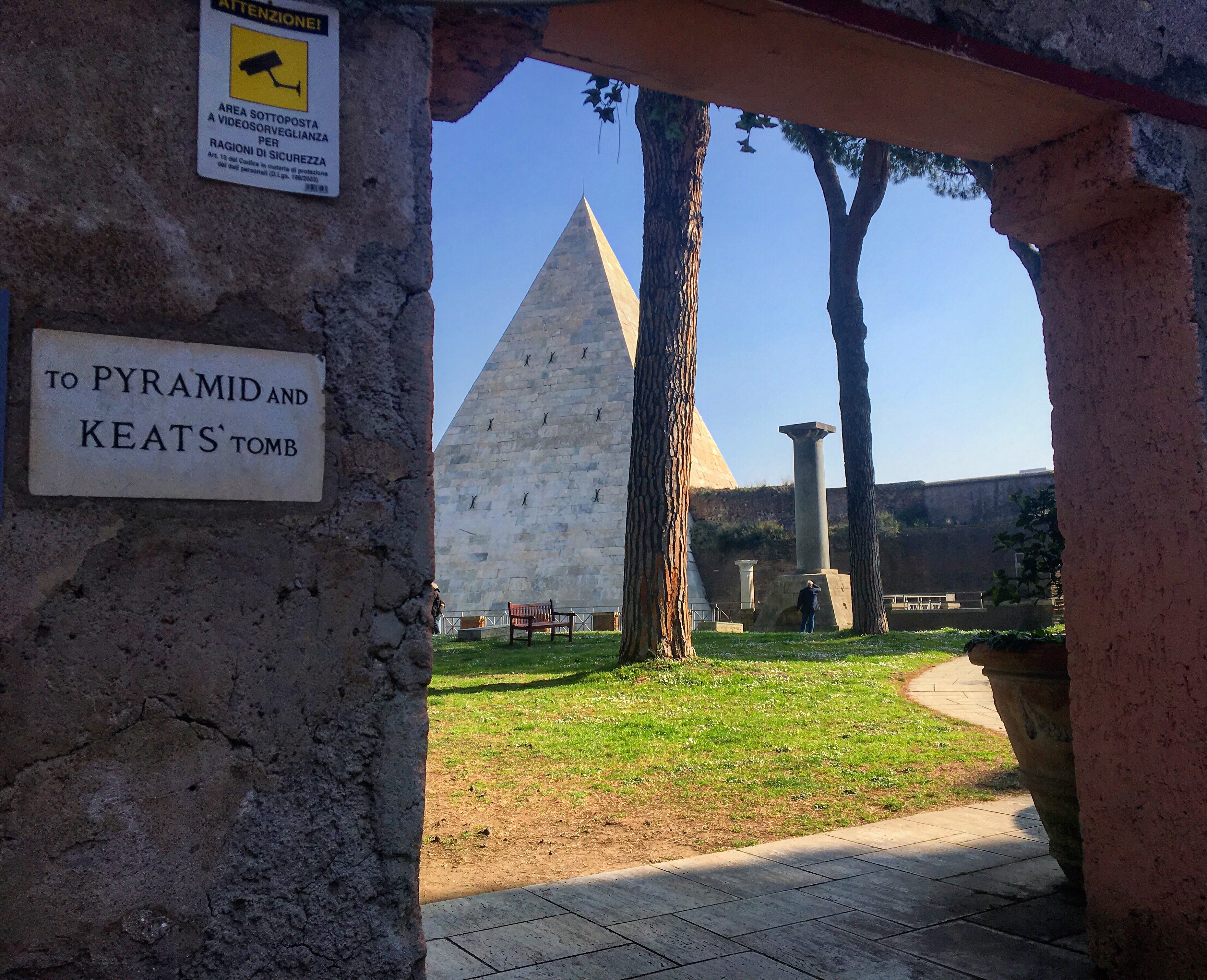
Tucked peacefully away from the noise and commotion of the Testaccio neighborhood behind old city walls and a pyramid (more on that later) lies what many consider to be the most beautiful cemetery in the world. To reach it, you must really know where to look as its location isn’t exactly obvious nor are its splendors visible to those outside its walls.
For a couple of centuries it had been the unofficial designated grounds for burying those outside the Catholic faith, which in itself was a kind of secret and solemn affair since the Catholic law of the land forbade anyone outside its faith to be interred on consecrated grounds, nor could they be buried during daylight hours. Eventually, the severity of Catholic policies gave way and more liberal regulations pertaining to the grounds were officially codified in 1921, asserting that any non-Catholic person who had been living in Rome at the time of their passing may be buried there.
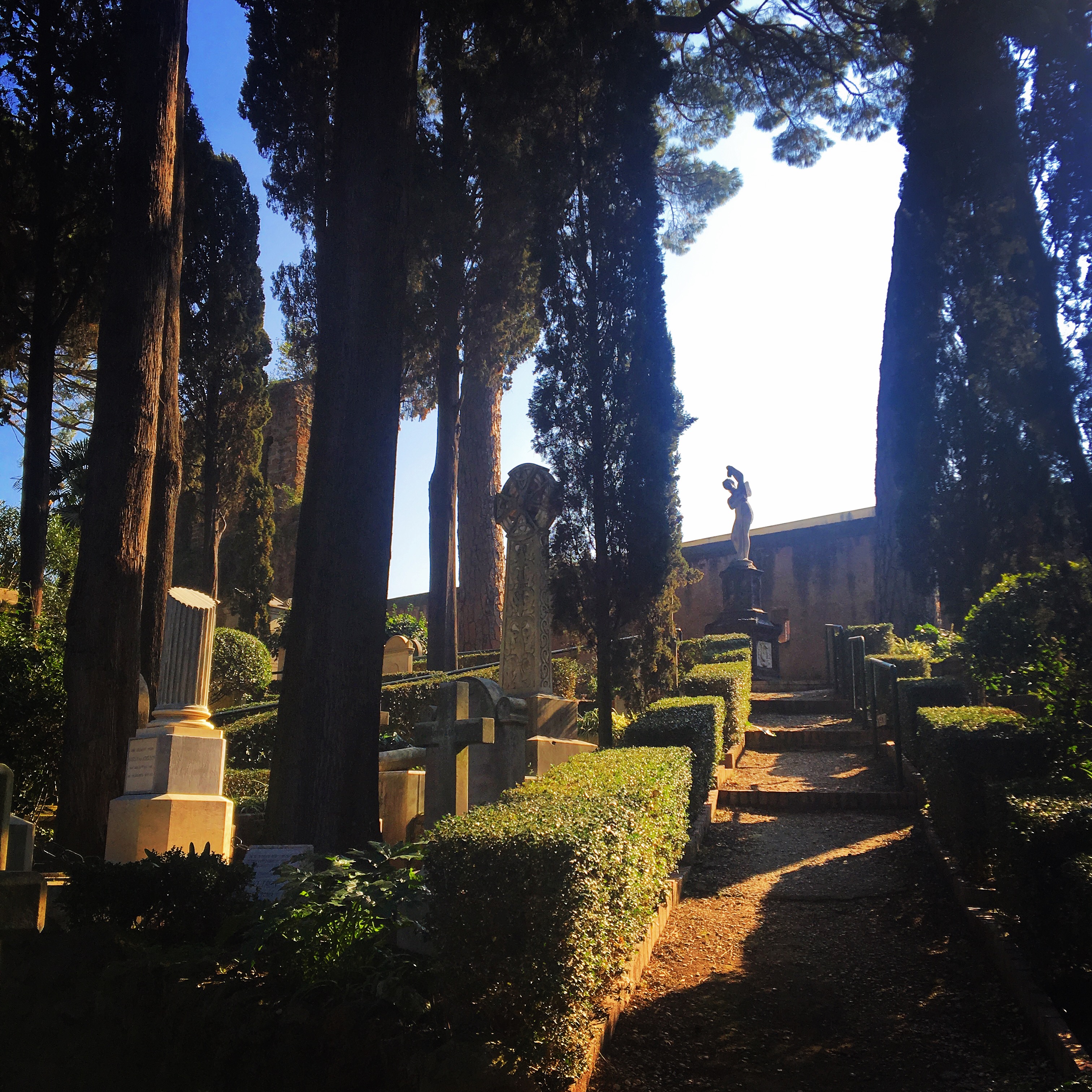
Entering the cemetery – especially on a sun-filled morning – gives you the feeling of stumbling upon some hidden, beautiful secret shielded from any influence of the modern world. It is as much a garden as it is a cemetery, filled with camellias, pines, and violets that make the air sweet with their perfume. Neat and orderly rows upon rows floored with pebbles organize the tombs of those from all corners of the world. So many faiths and languages are represented here in the form of lay people, diplomats, artists, and poets.

Is there any cemetery in the world that inspires such a feeling of timeless peace, hope, and certainty of belief as this one? Here is no fear of death, no anxiety, no decay, no difference between rich and poor, no cleavage of language or religion – only a feeling of unspeakable peace, something of the peace that passeth all understanding.
Johan Beck-Friis, The Protestant Cemetery in Rome
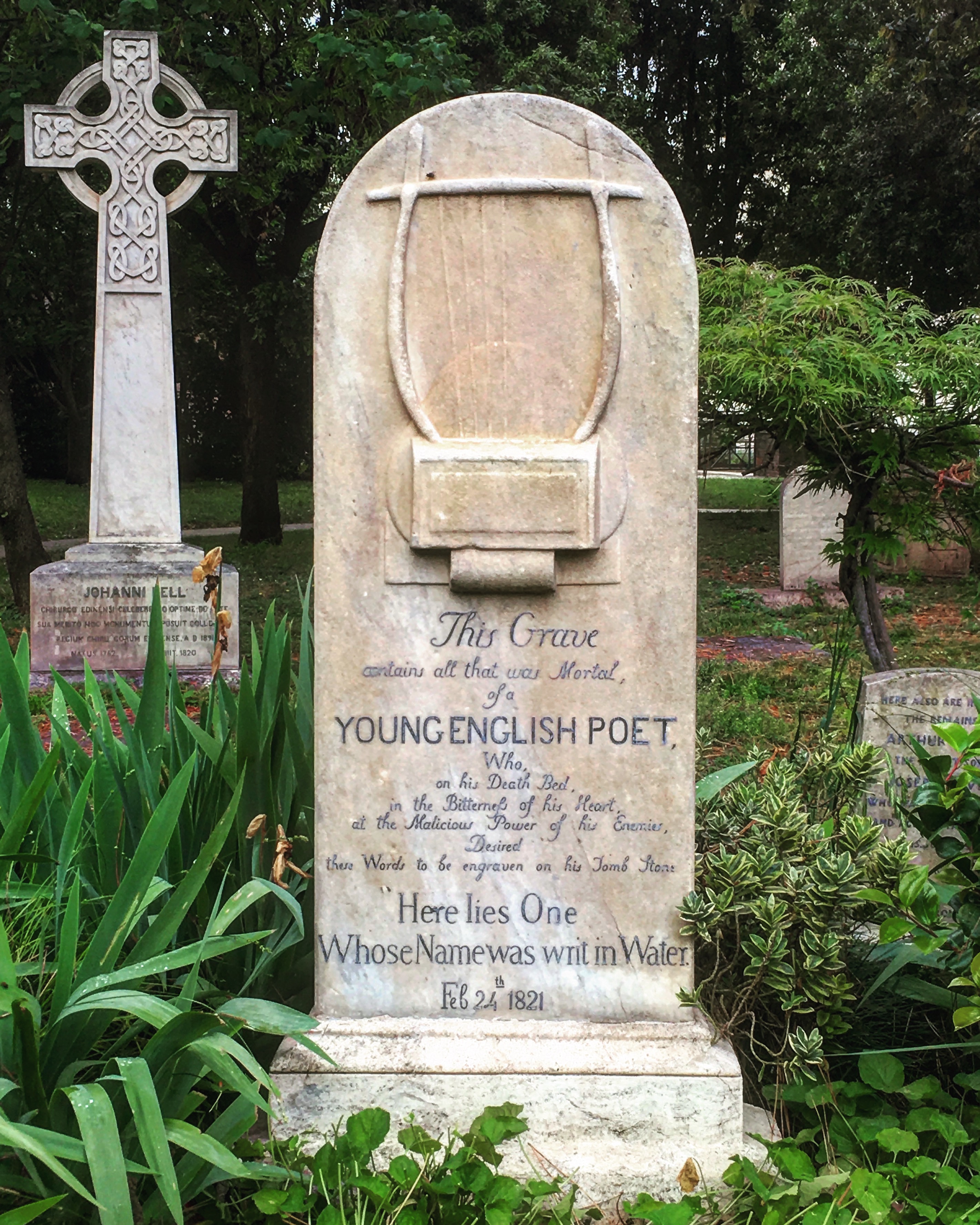
Perhaps the most famous of those interred is the English Romantic poet John Keats. Keats came to Rome in September 1820 in search of better health and was accompanied by his friend and caregiver, the painter Joseph Severn. Keats was suffering from tuberculosis, and it was typical for doctors of this time to prescribe warmer, more humid climates as treatment for the fatal disease. When he arrived in Rome, Keats was so weakened from the nautical journey that he didn’t have the health nor strength to leave his flat in 26 Piazza di Spagna (today the Keats-Shelley Memorial House). In the following winter months of 1821, Keats – sensing that his life was nearing its end – asked Severn to go and look at the place where he would be buried: the Protestant Cemetery. When Severn returned, he told Keats that white and blue violets, daisies, and anemones grew wild on the graves. Keats rejoiced and said that he “already felt them growing over him.” He died shortly thereafter on the 24th of February 1821, at the young age of 26.
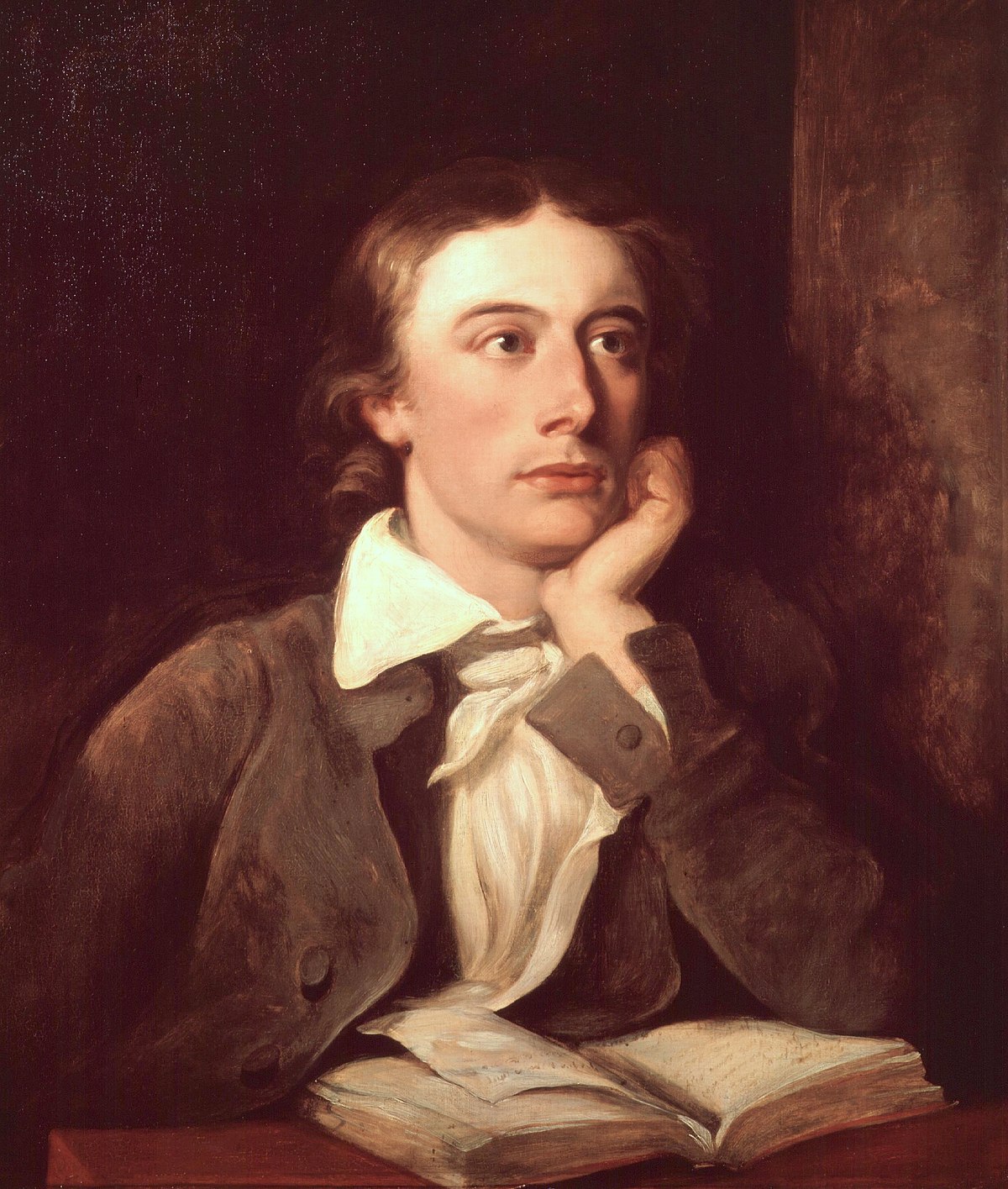
Keats’ grave is easily one of the most beautiful and peaceful spots in Rome and has been the poetically sacred destination for many throughout the centuries. Even Oscar Wilde would visit and lounge by Keats’ grave, composing odes to the tragic poet who died so young. No more than ten feet in front of the stone tomb are two benches where you can sit and take in the beauty of the surrounding scenery, including the aforementioned pyramid which stands in perfect view.
This pyramid is an oddity of sorts. Essentially it’s a tomb for Gaius Cestius, a Roman magistrate who was obsessed with Egyptian architecture and had this massive tomb built in 18-12 BCE for his final resting place. Not much else that is noteworthy can be said about the man, but the structure is startling and impressive and makes for a picturesque, classical background to these beautiful, peaceful grave sites.

The Protestant Cemetery also functions as a cat sanctuary, with volunteers who care for the animals entirely on a donation-only basis; they gladly accept contributions, no matter how small, from those who visit the cemetery. All over the cemetery the furry friends can be seen sunbathing on the graves, bringing a playful touch of life to the sacred grounds.
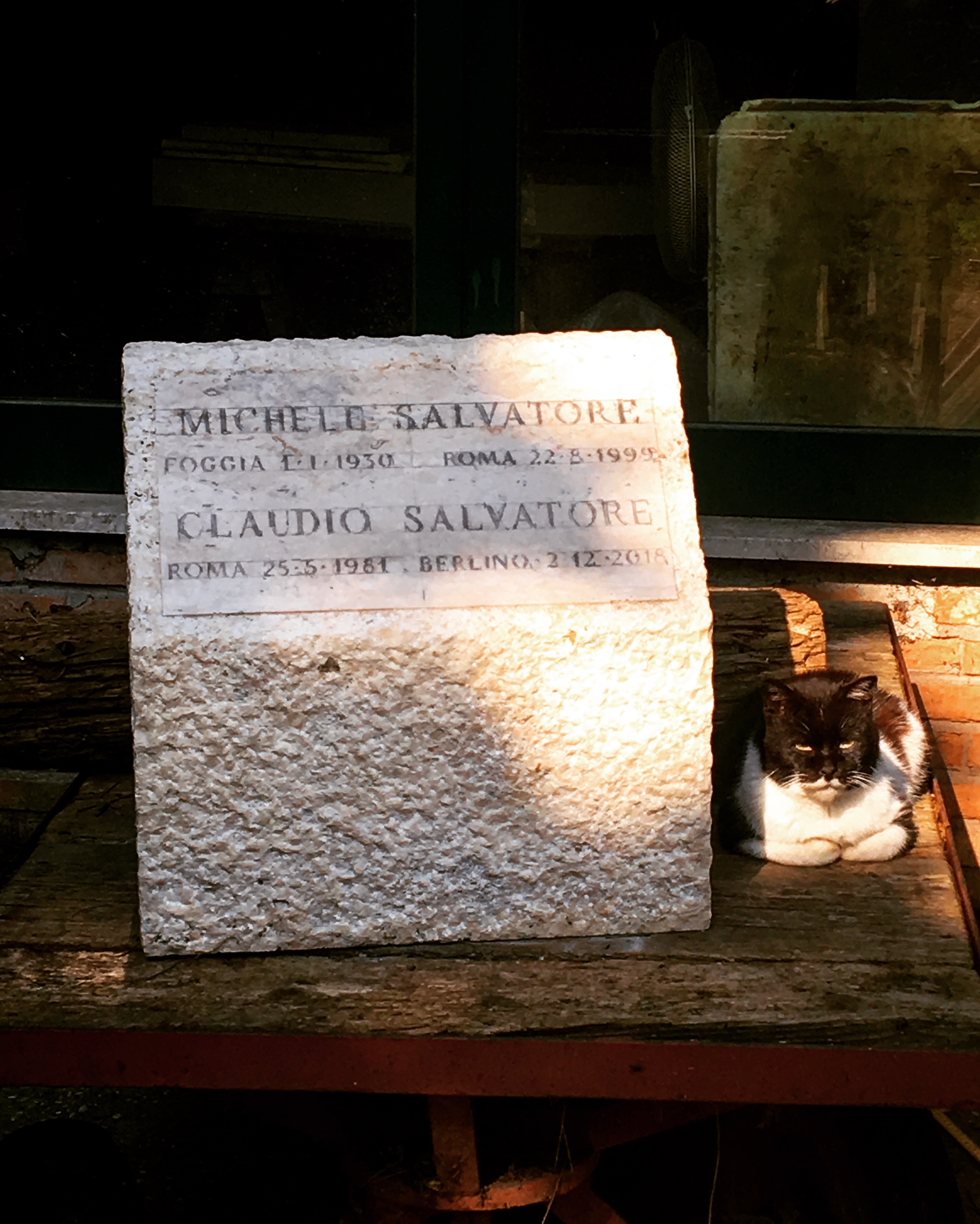
You can visit the lovely Protestant Cemetery everyday from 9AM – 4:30PM.
4. The Testaccio Market
Via Beniamino Franklin, 00118 Roma RM, Italy – entrances on Via Beniamino Franklin, Via Alessandro Volta, Via Aldo Manuzio, Via Lorenzo Ghiberti.

I have written about the Testaccio market in a previous post, but I nevertheless feel that it merits another mention here as it is quite hidden and away from the bigger, aforementioned attractions of Rome. If you visit the Protestant Cemetery, then this oasis of flavors is a mere ten minute walk away and is ideal for sitting, eating, drinking, and reflecting on the interesting sights that surround you.
If you want to have an authentic Italian experience, there is no need to spend several euros at a fancy restaurant or wait in long, winding lines that lead to the artistic treasures of the Vatican. If you have a curious mind and an appetite, why not venture to a market and discover for yourself the colors, tastes, and sounds that are Rome? Boxes upon boxes of deep purple artichokes, bright red and orange tomatoes, and delicate yellow zucchini flowers; tantalizing cured meats like pancetta, guanciale, and prosciutto hanging in perfect view; local proprietors and chefs meal prepping and talking loudly in that unmistakable Roman drawl; and wine – did I mention wine? You can get a glass to go at several of the vendors and sip leisurely while feasting your eyes on what could be tonight’s dinner.
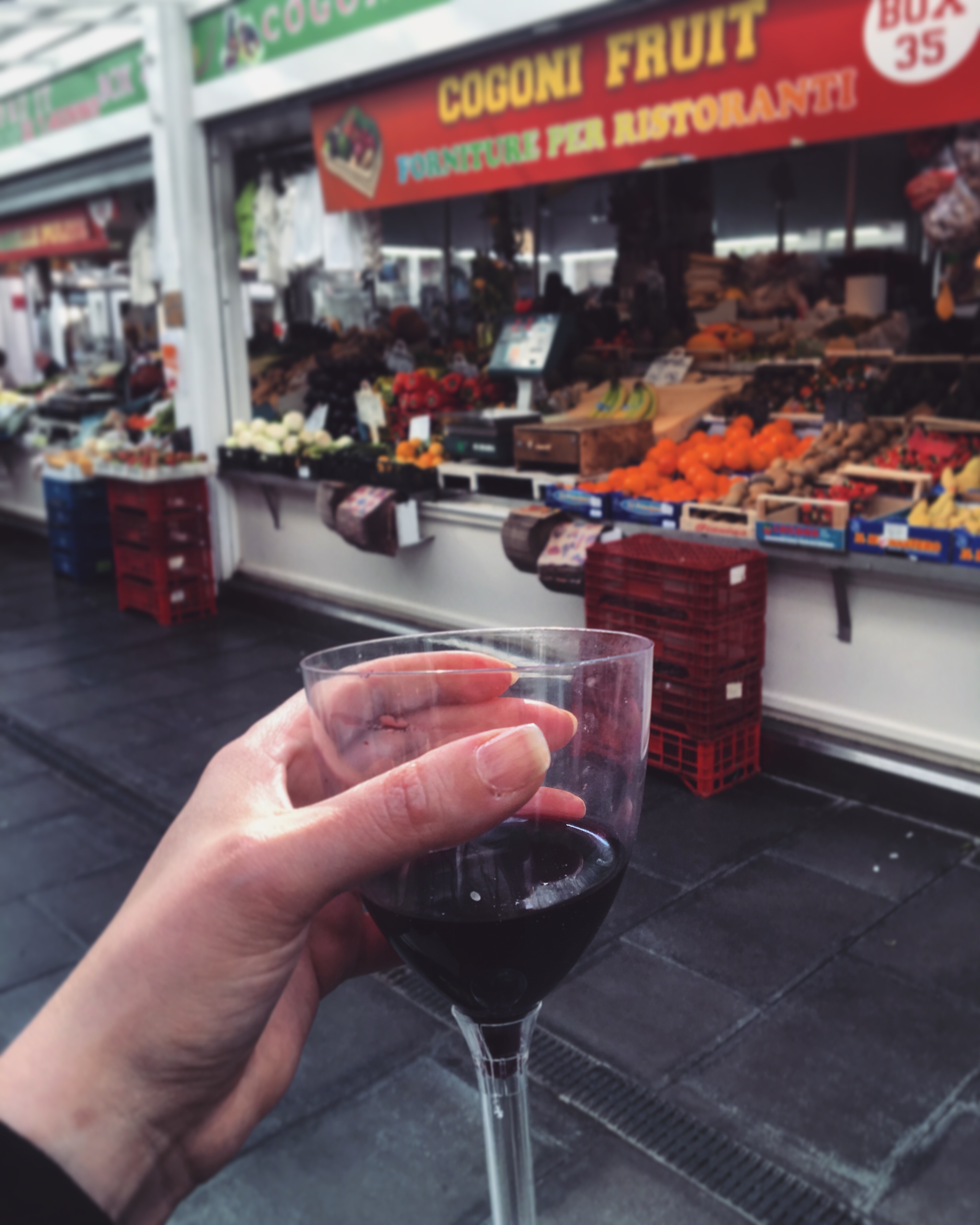
There are dozens of stalls that make up the market with several that offer a perfect lunch. I’m partial to this one, Mordi e Vai (box # 15), which serves maybe the best sandwich I’ve ever gotten my hands on: the Alesso di Scottona e Cicorietta, otherwise affectionately dubbed il classico, or “the classic.” Slow-braised beef shredded over a crusty bun that’s been sliced in half and dipped in the aforementioned beef’s braised juices, topped with sautéed leafy chicory (similar to Swiss chard or spinach). Sliced in half, served in a to-go bag that catches all the drippings, and a glass of house red wine to boot (pairs so well with that beef).
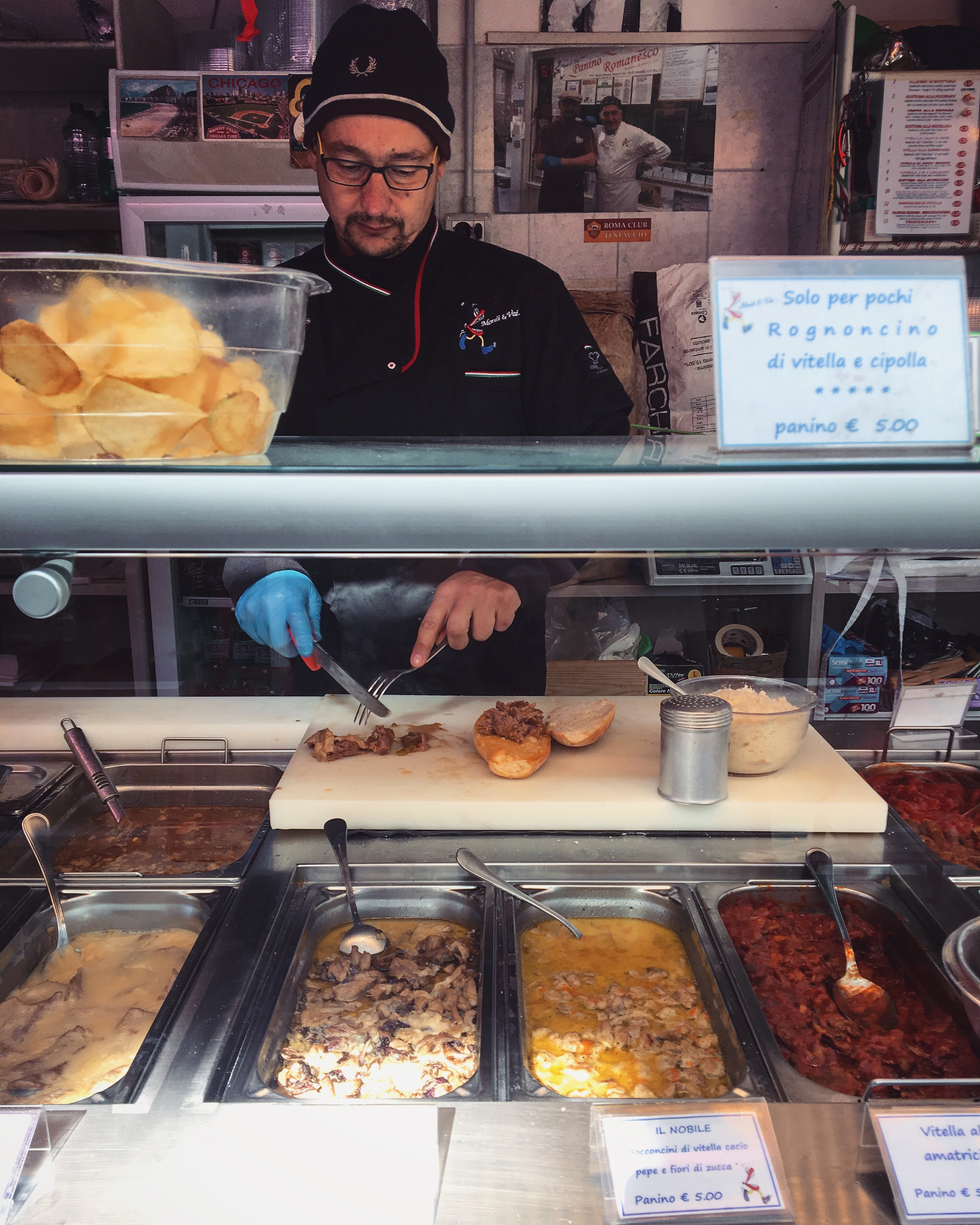
Above all else, the Testaccio market is a great, low-pressure opportunity to really mingle with the locals, practice your Italian, and sample the flavors that make Italy, well, Italy. The vendors are kind and will gladly pick out perfectly-proportioned, inexpensive ingredients for one of the most memorable meals you’re ever going to make.

You can shop and eat at the Testaccio market every day (except Sunday) from 7am – 3:30pm. Don’t forget to bring a bag for your shopping.
5. Borromini’s San Carlo alle Quattro Fontane
Via del Quirinale, 23, 00187 Roma RM, Italy
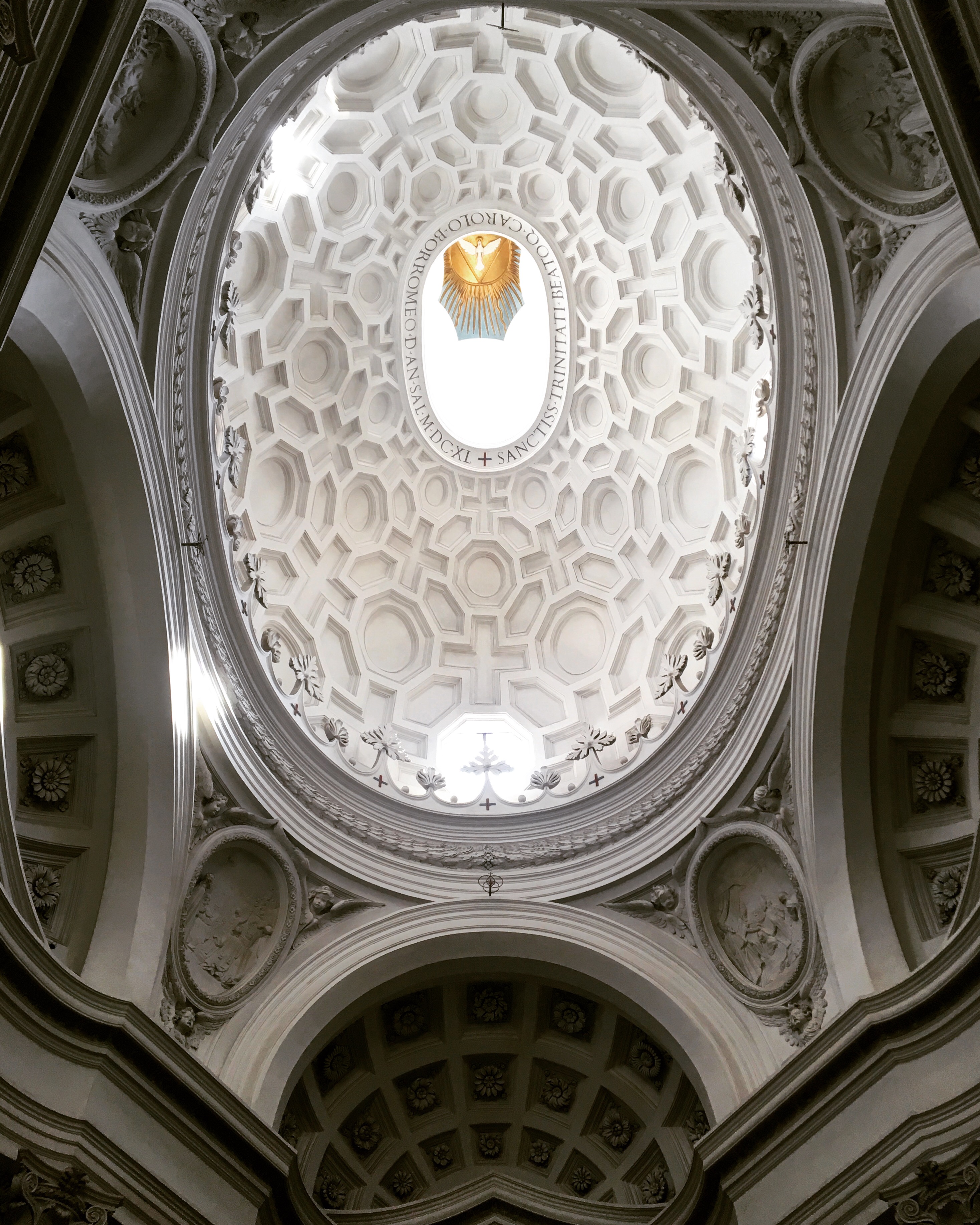
While the majority of Rome’s visitors in search of artistic and architectural wonders will no doubt cross paths with the Baroque legend Gian Lorenzo Bernini, few are aware of his brooding, intellectual rival, Francesco Borromini. Most of the big names we associate with the Renaissance and the movement that followed it, Baroque, were men who mastered different crafts (painting, architecture, sculpture, etc.) all at once, but Borromini was a true architect who only devoted his energy and creativity to creating some of the most complex but elegant buildings still standing magnificently in Rome. While Bernini’s charisma and personality are immortalized in his incredible works scattered throughout the city (the mythological sculptures at the Galleria Borghese, the spectacular fountain of the Quattro Fiuimi, the colossal baldacchino over St. Peter’s crypt in the Vatican’s basilica, just to name a few), the complexity and torment of Borromini’s genius can be felt just as intensely in the churches, courtyards, and staircases he designed and built, at the same time as Bernini, throughout the city.
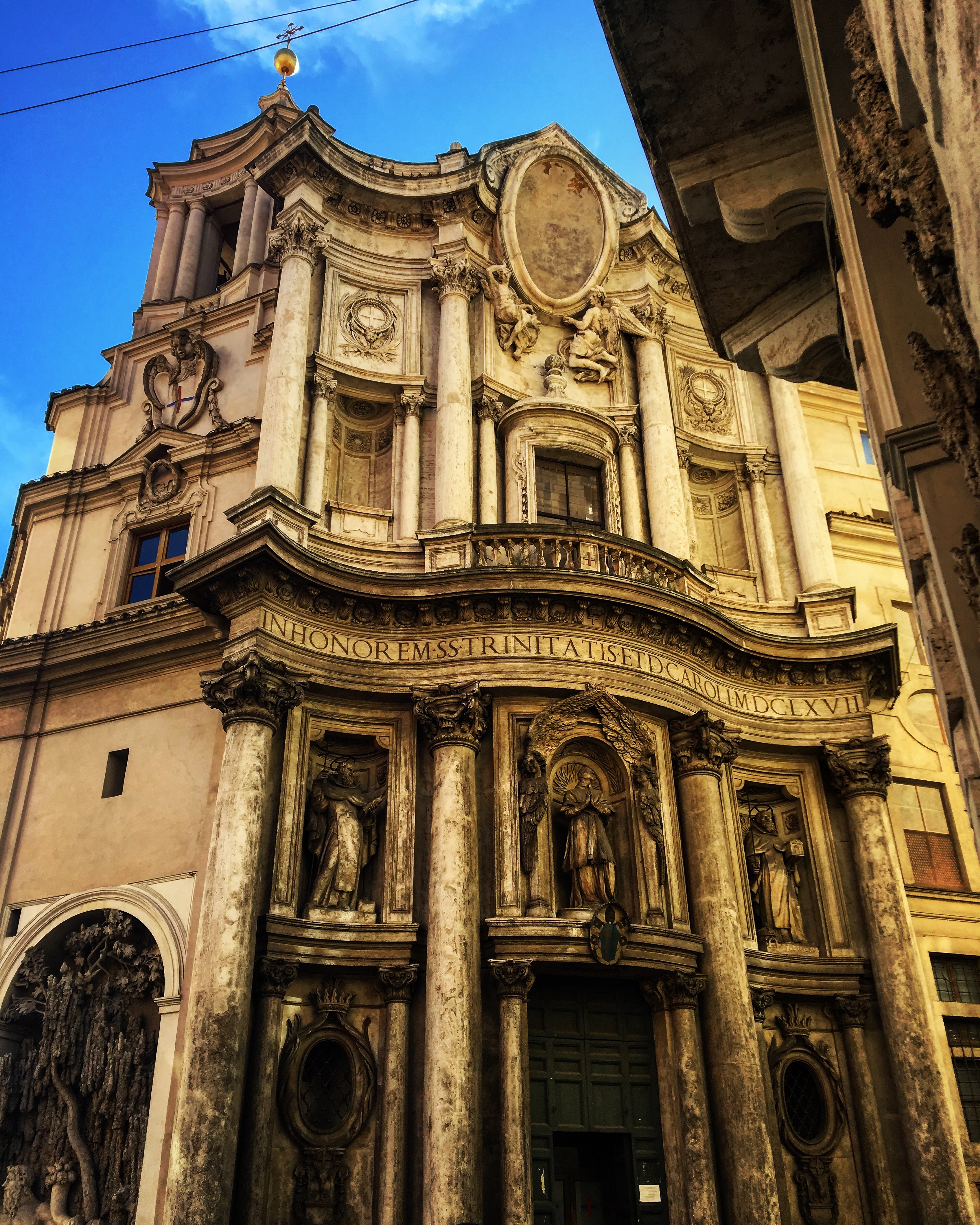
Perhaps no other piece of architecture shows off the inventiveness and singular imagination of Borromini than his church San Carlo alle Quattro Fontane. Across an intersection from the Palazzo Barberini (which contains competing staircases designed by – you guessed it – Bernini and Borromini), the small church of San Carlino, as it’s affectionately known, stands on a relatively narrow street corner and is seemingly bigger than the actual space it inhabits.
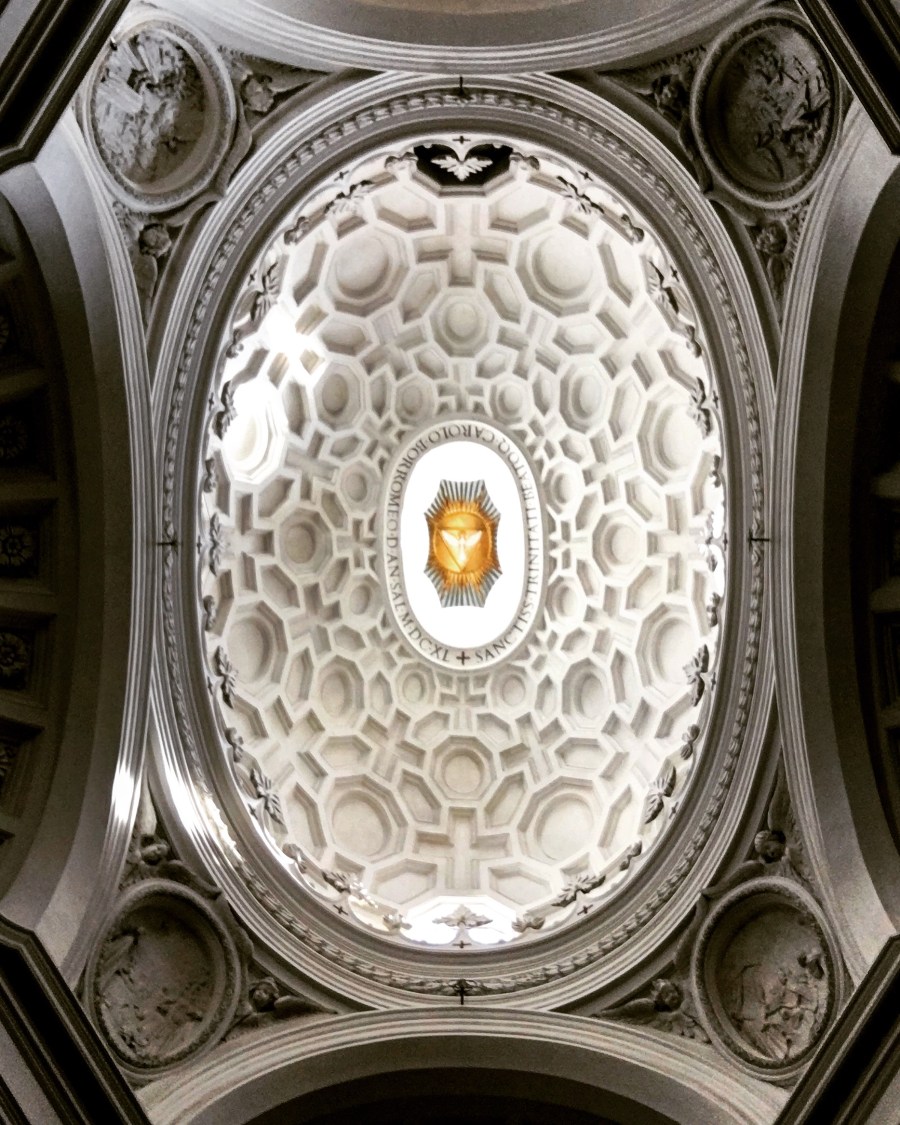
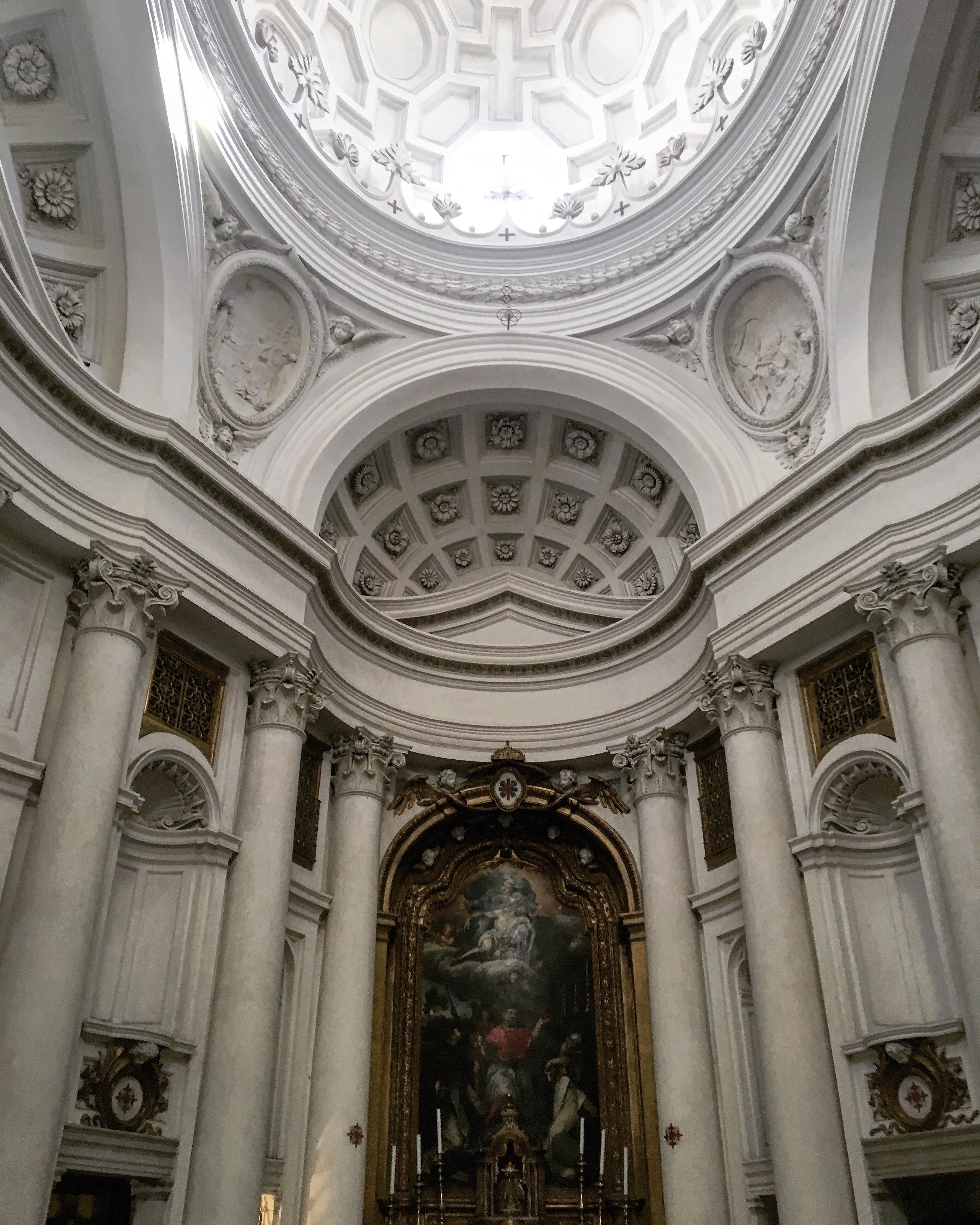
Walking inside, you are at once enveloped by a remarkable space with elaborate sculpting that draws your gaze high up towards one of the most spectacular domes in all of the city. Employing an optical trick, the sizes of the shapes that make up the dome diminish as they get closer to the pinnacle, and in doing so, create the effect that the dome is larger and taller than it really is. The same can be said of this entire space. It is so small and yet at the same time so grand. The architectural flare and artistic style of the church seem to scream the name of the architect louder than the patron saint for whom it is dedicated.
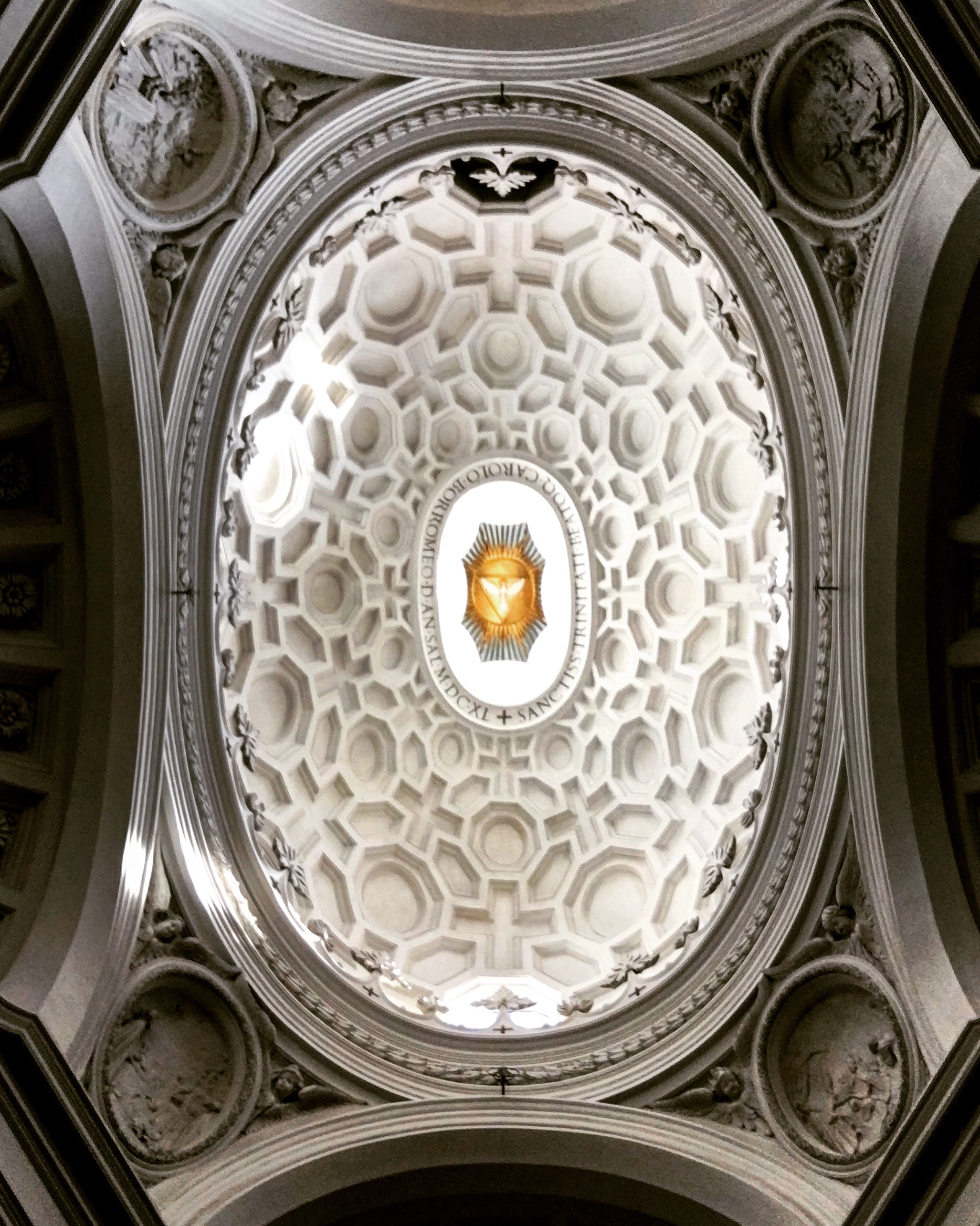
A study in geometry, the church’s blueprint of triangles and circles is evident all around you, creating an organic holy space that cuts out harsh ninety degree angles and instead envelops you in majestic curves. The church has no side aisles and no transepts – there simply wasn’t the space for it – and yet it lacks nothing. Here, the sum is by far greater than the parts.

The cloister – both a private and public space – is dynamic and playful and contains details that aren’t anticipated in such a space. Six archways frame the ground floor area, supported by Tuscan-style columns intentionally not placed side by side, but instead with the outside columns standing at forty-five degrees from their partner. The result feels more organic; by avoiding harsh angles once again, Borromini gives a traditionally quiet space more energy and dynamism.

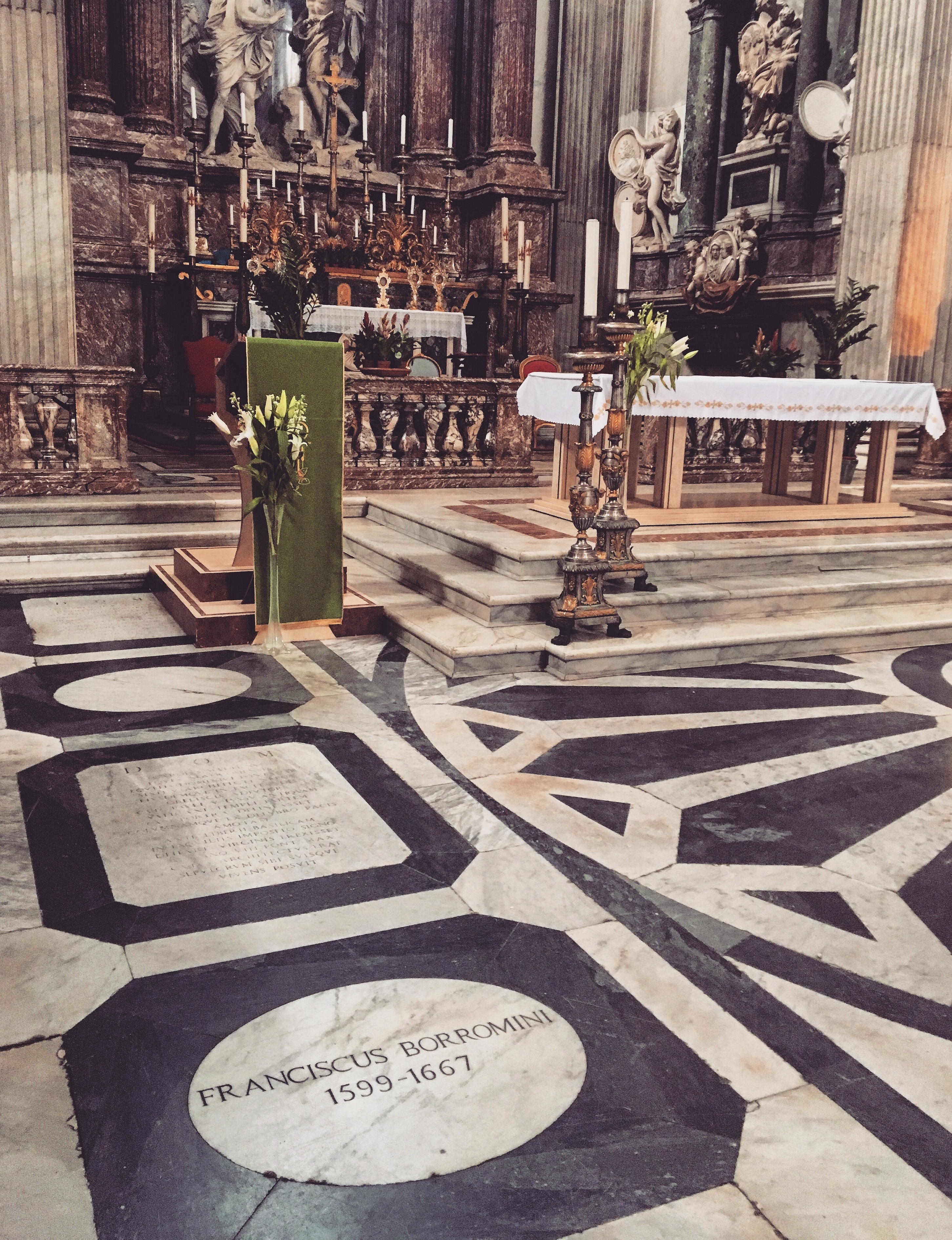
Borromini eventually succumbed to the weight of his own his genius and on a sleepless night filled with nerves and despair, he impaled himself on a sword and died. His final resting place is next to his mentor, Carlo Maderno (architect of the giant facade that adorns St. Peter’s Basilica), in the basilica of San Giovanni dei Fiorentini, a church along the Tiber to which he also contributed his architectural prowess.
You can visit San Carlo delle Quattro Fontane Monday through Saturday, 10am – 1pm, Monday through Friday, 10am – 1pm, and Sunday 12 – 1pm.
 Allyson Abroad
Both of us love Italy too.. It is just soo many things to see and do and not forget the gelato:)
LikeLiked by 1 person
yes, too many things! I could write a whole post about the gelato.. 🙂
LikeLike