Why do we do the things we do? What drives us to take chances, or to embrace change – or not?
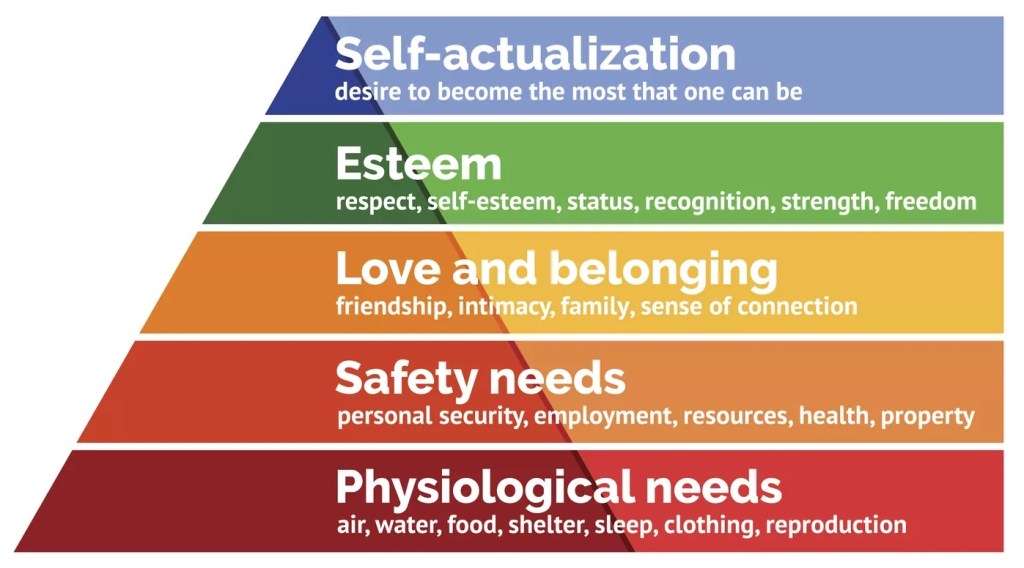
To say I’ve been self-reflective since taking up full-time residency in New York City almost two months ago would be a bit of an understatement. Most evenings, usually while juggling pots and pans in the small kitchen of our railroad-style, pre-war sublet in Queens, my husband and I talk a great many things over, an entertaining pastime of contextualizing the wildly new experiences we seem to incur with each major move. And at some point in one of these recent chats, Maslow’s hierarchy of needs came up and it seemed to offer some insightful answers to the “why are we doing what we’re doing” questions we sometimes ask ourselves.
Maslow was an American psychologist who, in 1943, wrote a paper for the journal Psychological Review called “A Theory of Human Motivation.” Besides describing specific levels of factors that drive human motivation, Maslow included observations on how these needs relate to our innate curiosity; in other words, what makes us do the things that make us uniquely us (Wikipedia). Upon further reflection of each of these needs, I began to connect some personal dots.
Physiological and Safety Needs
My husband and I are endlessly entertained by our living accommodations and neighborhood in Queens, for all its quirks and personality and inconvenient charm – even more so when we compare it to the cushy living experienced the last several months at my mother-in-law’s 4,000 square foot Atlanta home. But it’s dawned on us that the inconveniences we currently put up with are in exchange for the fulfillment derived from what occupies our time and being in New York City, in addition to the rich experiences the city has to offer its residents.
On one hand, our current living conditions have some noteworthy pros by any standard of city living: a quick two blocks from the subway line, ground floor apartment with garden views, updated kitchen appliances, great water pressure, solid produce and grocery options within walking distance, extremely affordable rent. Needs met, for sure.
But then there are the cons, which are inconvenient depending on what you’re accustomed to: no dishwasher, no central air, a mini and fussy washer and dryer, white tile floors that beg to be scrubbed every week, general bad feng shui of furniture (also known as the nature of subletting itself). Fortunately, these inconveniences bring to mind experience and resources learned from my cumulative time living and stuyding in Europe. For three years, I lived in a mid-19th century townhouse near a canal in Amsterdam and functioned without a dryer, oven, microwave, car, or American grocery stores. And despite the lack of modern conveniences, those were the most rich and fulfilling years of my life at that point; it taught me a lot about my own skills and what I consider priorities. A lack of full amenities forces you to become resourceful within your neighborhood, strengthens your self-reliance muscles, and forges an intimacy with the past, being surrounded by centuries of history and architecture. I’d like to imagine that the current sights, smells, sounds, and people I encounter in New York City – especially the surprisingly vibrant ones on early morning jogs – will form a core memory of this time of exploration and growth.

On my first weekend as a New Yorker, my husband showed me Bathesda Terrace in Central Park for the first time.
Love and Belonging
While the work of building this new chapter has been sustained by structure and healthy habits, it’s also enabled by a partner who, for almost a decade, has shown up consistently with drive, focus, and imagination. One who says things like, “alone you go fast, together you go far” and who pushes for individual as well as shared goals. It’s a big reason why we moved here – to grow personally and professionally, to advance in our individual careers, to widen our networks, and to be privy to the next international opportunity. But city after city, career move after move, home after home, he creates my continuous sense of connection, and it’s not lost on me how rare and precious that is.
Esteem
One hard lesson I’ve had to learn over the years is that I’m the one responsible for giving myself the validation I need; I can’t depend on any one person or another to validate and congratulate me on the opportunities and choices I’ve made for myself. Accepting this realization hasn’t come about easily, to say the least, but I’m aware of how privileged I am to have the time and means to devote attention to the work involved. For the better part of this past year while we plotted our NYC move, my basic needs were met in abundance, and I was largely left to my own devices. For months, my days were focused solely on cognitive and esteem needs; in other words, my own personal and professional development. I flooded my brain with books and structured hours of deep work around networking, job seeking, and career development. I kept a consistent routine of exercise and mindfulness, and made the most of a luxurious kitchen and my own company. At times, especially in the beginning, it was difficult, not to mention often emotionally fatiguing (familiar side effects, I’ve found over the years, from moving great distances and re-ingratiating with your various networks). But the unlimited autonomy to self-direct and create a healthy routine not only sustained me but fulfilled Maslow’s esteem-related needs, like freedom and strength.

All this goes without saying that physical well-being is intrinsic to sustaining habits in service of self-development. A key component to my own success turns out to be a welcomed side effect from removing the habit of alcohol: boundless energy and inherent joy in maintaining routines and rituals of self-care. While it’s delightful to look forward to and relish in the consistency of finely-tuned habits (not to mention the luxury of autonomy), its bigger significance is the undeniable correlation between physical well-being and mental health. Once you begin to reap the benefits of investing in one aspect of health (physical, spiritual, mental), you soon gain the benefits in the others as well.
(Aspiring to) Self-Actualization
I couldn’t imagine taking on New York City in my twenties, or even my thirties, the version of me with a drink in hand and ready to go find a party somewhere. It makes me laugh when I think about it, in a sentimental way, and I don’t waste time wishing I’d changed my habits sooner. After all, that’s how we welcomed Atlanta, Amsterdam, and Portland. But these days, mindfulness and self-care are grounding me in a very big city that offers very exciting opportunities. It’s funny to see how these routines actually enable me to get more out of the city while taking on this new chapter: energetically navigating the city on foot and catching quickly approaching trains; turning my Manhattan commute into a breeze with an abundance of good books on hand; waking up energized, ready to pour my brain into work that not only inspires me but utilizes my best skills; creating the space and time for prolonged moments of serenity and calm within a city that never sleeps. There’s a real joy in achieving a balance, even if it’s in 900 square feet.
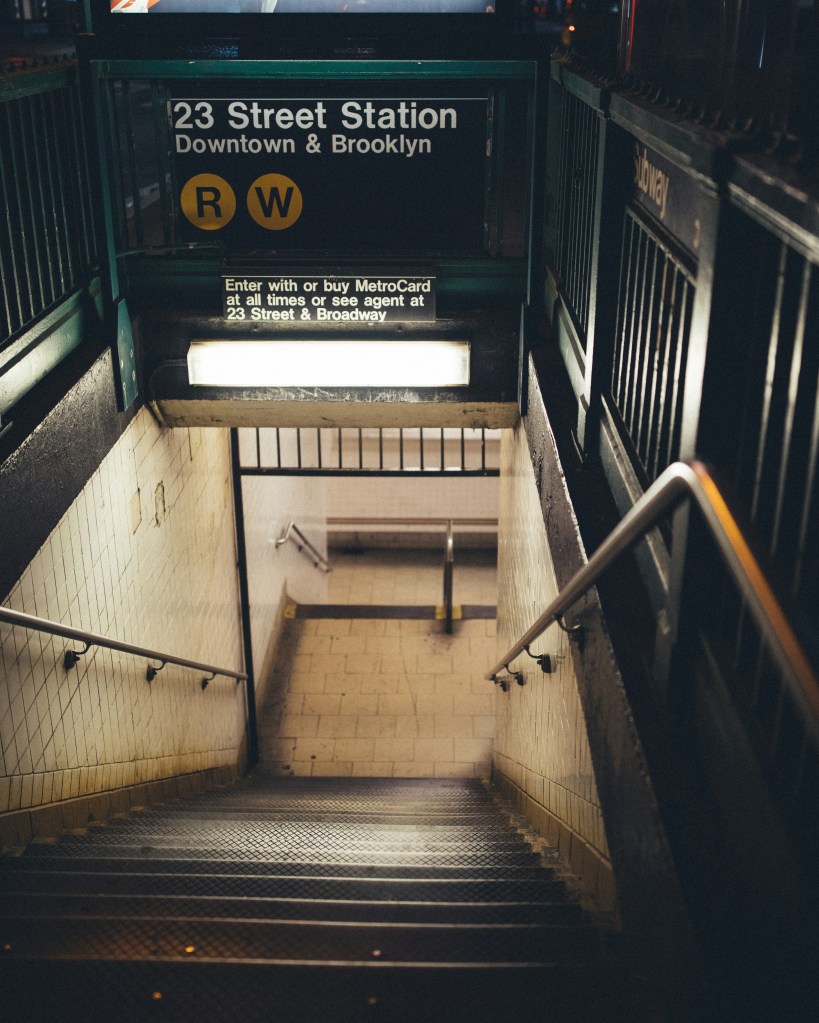
So far, the intensity and caliber of it all is satisfying the self-realization itch that’s driven us from city to city over the years; maybe Maslow was really onto something. But for now, what’s proving to be the best thing – the most fulfilling and self-realizing thing – is the energy and freedom to focus on the work I’m engaged in, the people I’m connecting with, and the city I’m now calling home. And if I have to hang my laundry up to finish drying in order to accomplish that, then gladly so be it.
Work Cited:
“Maslow’s hierarchy of needs.” Wikipedia, The Free Encyclopedia. Wikipedia, The Free Encyclopedia, 6 Jul. 2024. Web. 21 Jul. 2024.
 Allyson Abroad