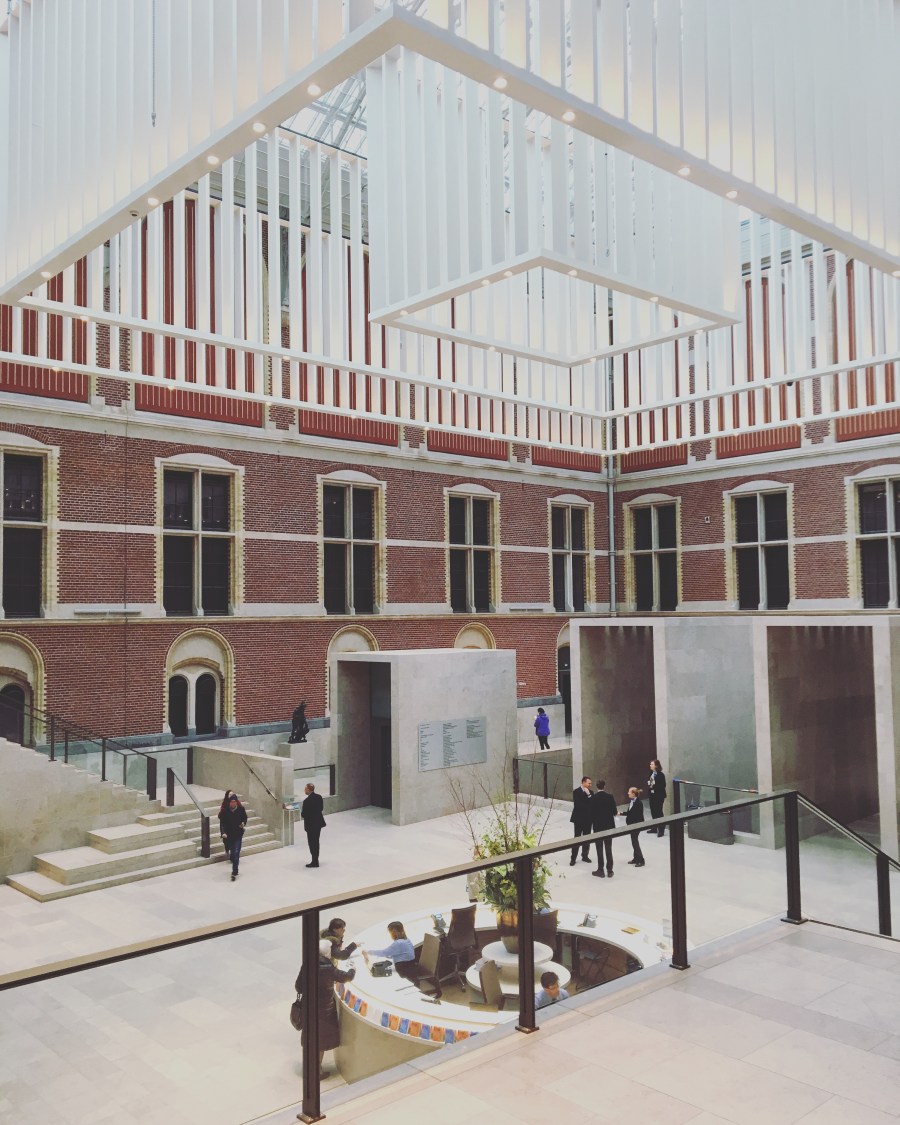
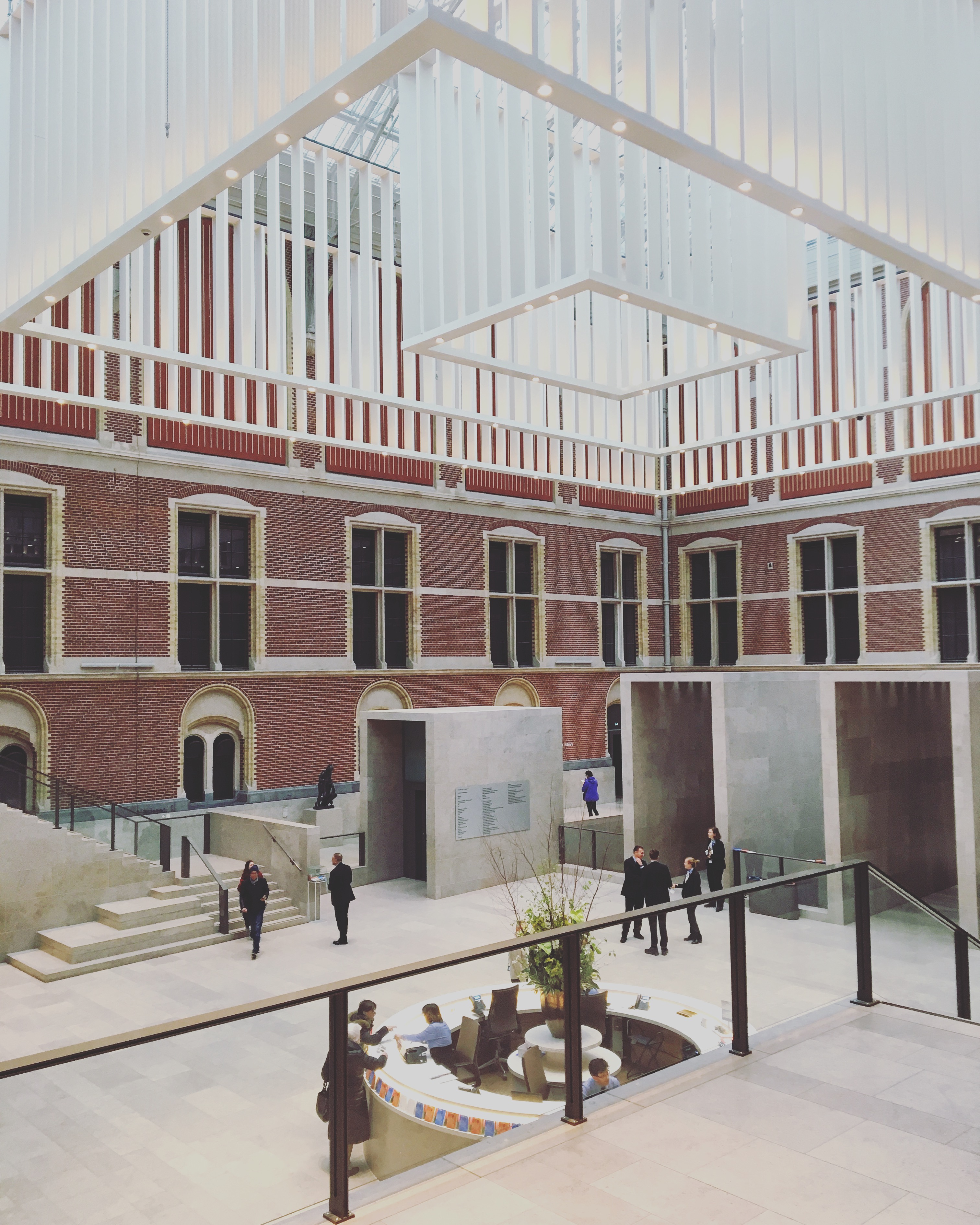
I originally decided to visit the Rijksmuseum to study the 17th century Dutch painters who were strongly influenced by their contemporaries in the Italian schools of painting and inspired by the warm Italian landscape. Located in a room that is a straight shot to the right of the Rijkmuseum’s crown jewel, The Night Watch by Rembrandt, a group of paintings mostly showcasing the sun-drenched landscape of the Italian peninsula surrounds the visitor, and offers some much welcomed warmth on an otherwise very Dutch winter day. Many of the paintings reveal the Dutch painters’ desire to bask not only in the Roman sun, but in the spectacular ruins and history of its republic and imperial days. The influence of their classically trained colleagues is perhaps most evident in their use of tenebrism (a dramatic form of chiaroscuro) and other characteristics reminiscent of the great Caravaggio.
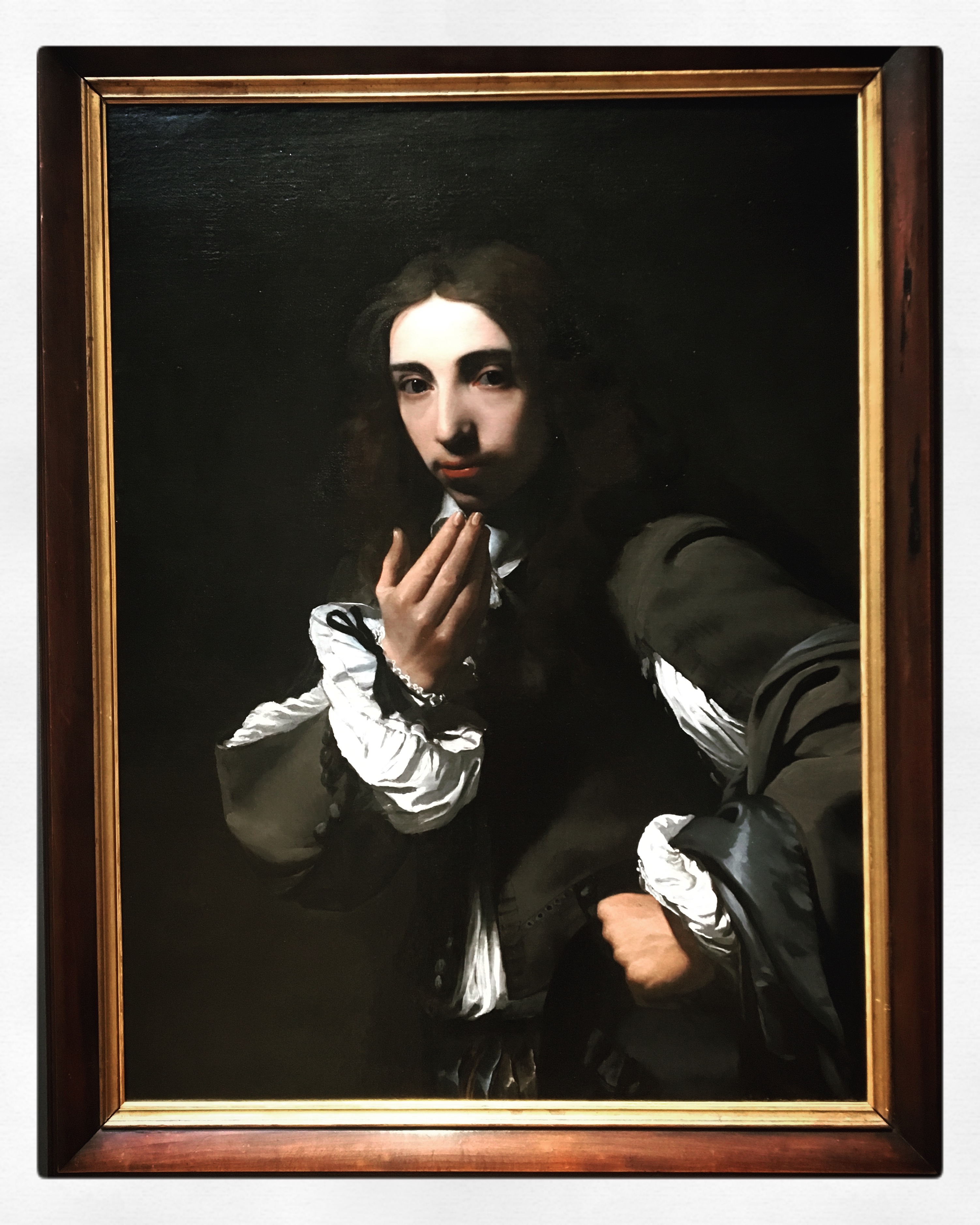
A portion of the paintings in this room are by Flemish painter Michiel Sweerts (1618-1664), who spent a significant amount of time in Rome and was well-received by his fellow expatriate artists (particularly in the Bamboccianti circle) as well as by the then reigning papal family – even receiving a knighthood of sorts. What’s strikingly familiar in his paintings is the influence of (again) Caravaggio. The first painting of his that demanded my attention was his Portrait of Joseph Deutz (c. 1648-1649), who was a member of one of the most prominent trading families in Holland. This portrait – the only one in the room – is remarkable for some obvious reasons, most notably the dramatic use of tenebrism that lights up his face and hands (not to mention those fabulous sleeves). The dramatic play between light and dark pulls your attention to the expression on his face and the beckoning of his hands – it’s as if he is inviting you to follow him along on a journey of discovery as he explores the history and secrets of Rome, the Eternal City. This impression makes sense when you consider that at the time of the portrait’s commission and creation, Sweerts and Deutz were both in Rome, the latter presumably undertaking his grand tour, like many of his peers. A grand tour, in this context, was a kind of rite of passage that young aristocratic men (and chaperoned-women) in the 17th and 18th centuries often embarked on, their destination set on the sites and wonders of classical antiquity and the Renaissance. The focus here was to admire, study, and wax poetic over specific masterpieces of art and architecture. For those who could afford it, this trip often began in England, crossed over the Channel to Paris, went through Switzerland and the Alps, and finally covered the most significant Italian cities (Venice, Florence, & Rome), often concluding in the idyllic warmth of southern cities like Naples and the ruins of Pompeii.
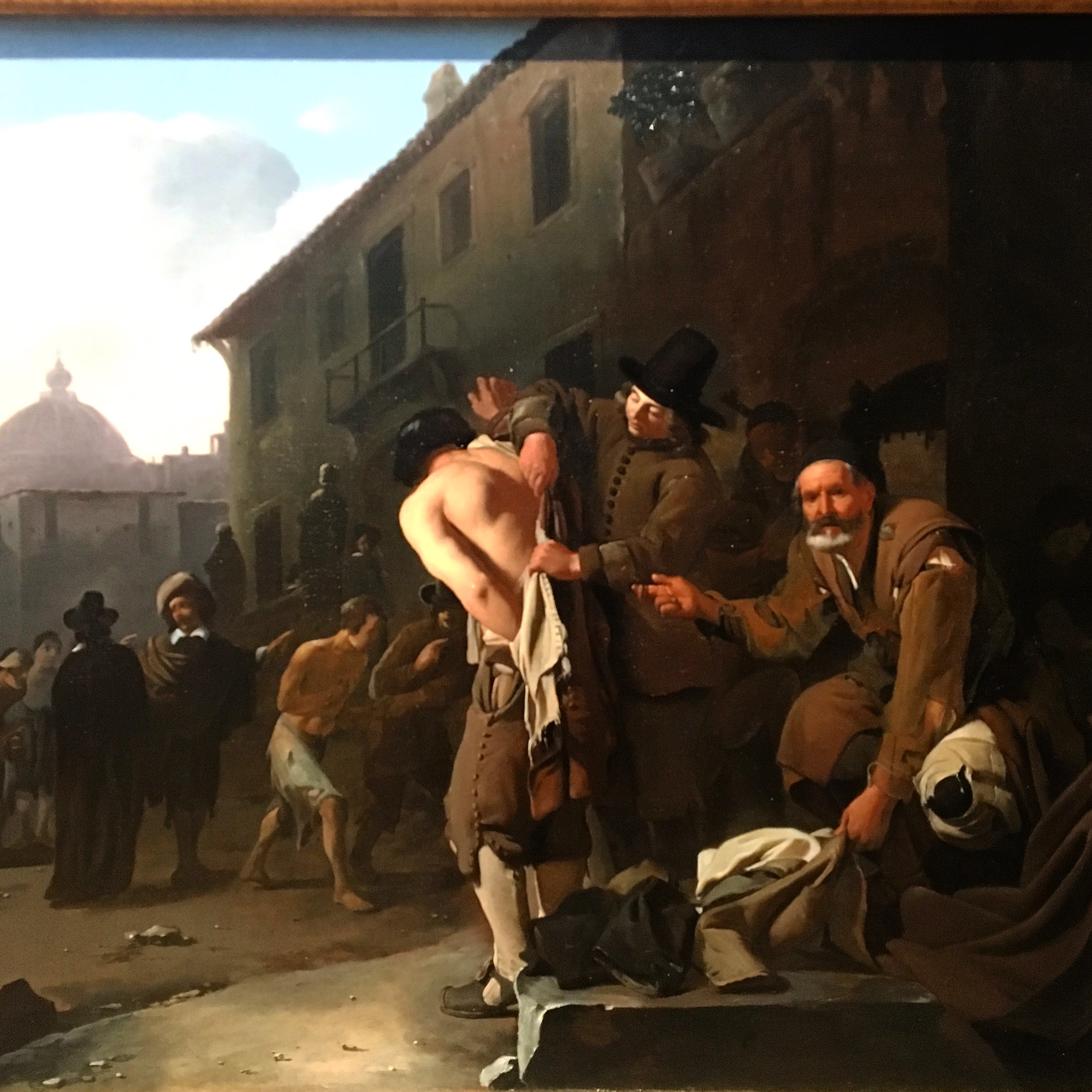
Present in this room are other pieces by Sweerts that further display influences of Caravaggio, in particular genre paintings that depict everyday people set within a religious theme, specifically the corporal works of mercy. The Rijksmuseum owns four paintings from a series by Sweerts called the Seven Acts of Mercy. My favorite of the four is the one one above, Clothing the Naked (ca. 1646-1649). From the museum’s description:
By having one of the figures look out of the painting at the viewer, Sweerts enhances the poignancy of ‘clothing the naked.’ The brightly lit shoulder of the man at the center of the composition emphasizes his nakedness, giving the painting a sense of intimacy.
Rijksmuseum
Having accomplished my goal of learning about the Italian influence on these Dutch and Flemish painters, I decided to give time and attention to a few of the other rooms that I often just walk right past. Let’s face it, it’s a relatively large museum containing room upon room of treasures, and it’s natural and easy to cling to the familiar while overlooking the seemingly ordinary.
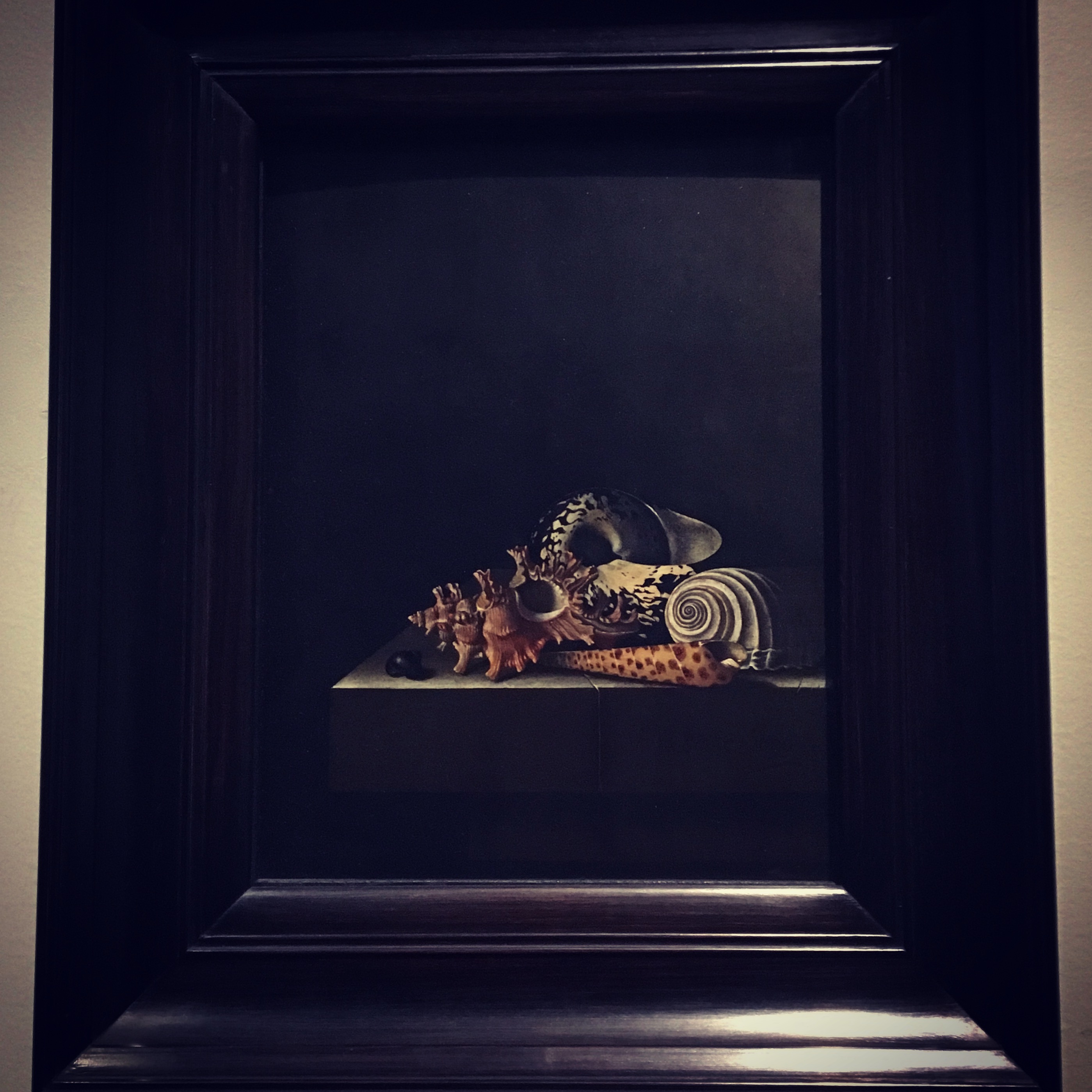
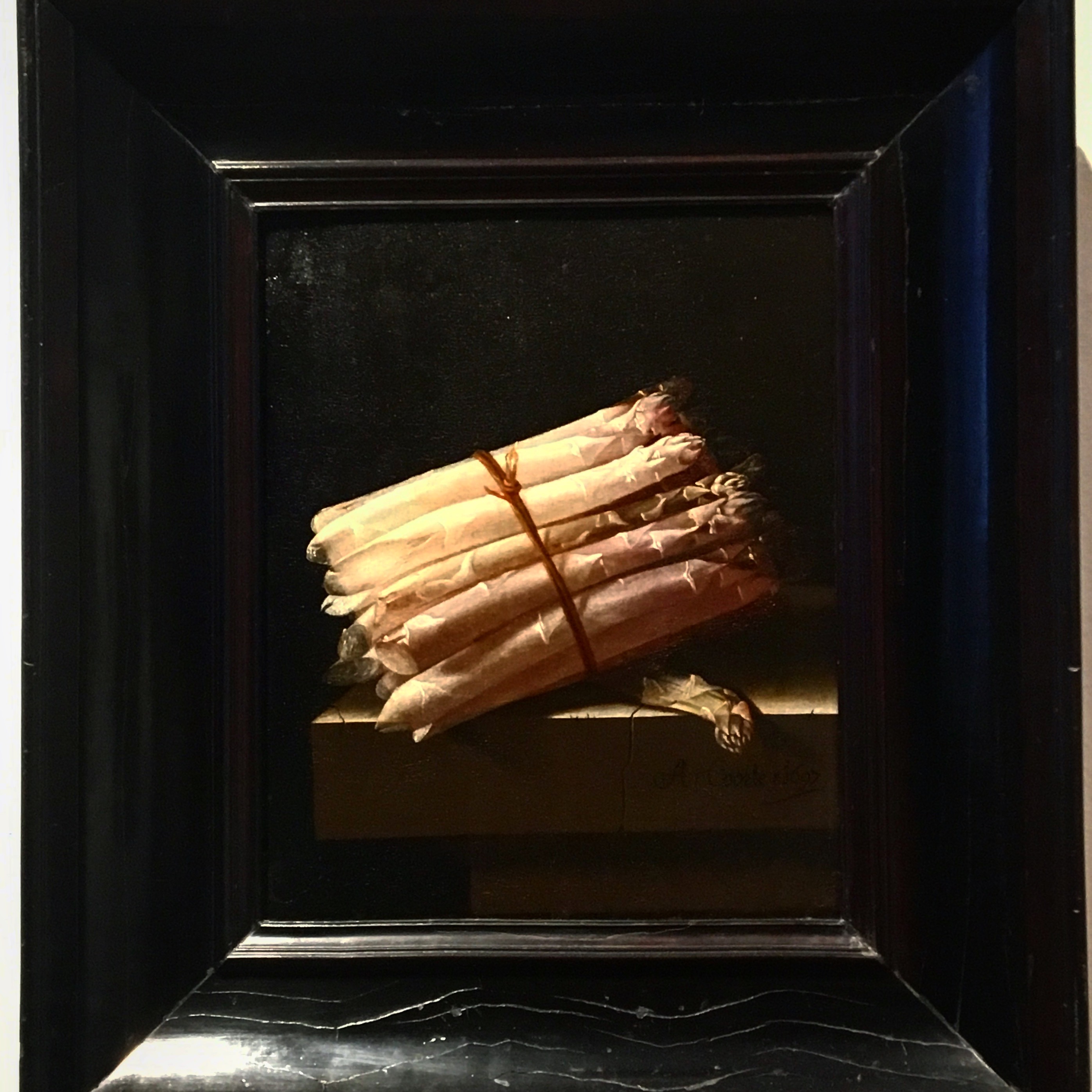
Rounding out the second floor dedicated mostly to works from the 17th century is a corridor of small rooms that contain (surprise, surprise) small paintings, seemingly arranged by theme. One such room showcases a series of still-life paintings by the Dutch painter Adriaen Coorte (1659/1664-1707). They are simple in their subject matter: a handful of sea shells (a hot commodity of this time), three peaches; another depicts a tied bunch of asparagus, the one next to it, a bowl of berries. Yet the technique and detail are nothing short of exquisite and elegant. They are patient and meticulous studies, uniform in their light and dark contrast. Each contains a mostly pitch-black background, as well as a hidden source of light that perfectly illuminates the subject. The definition and intricacies of the objects simply pop – you can’t help but to lean in closer and closer, and the more you look, the more outstanding they become.
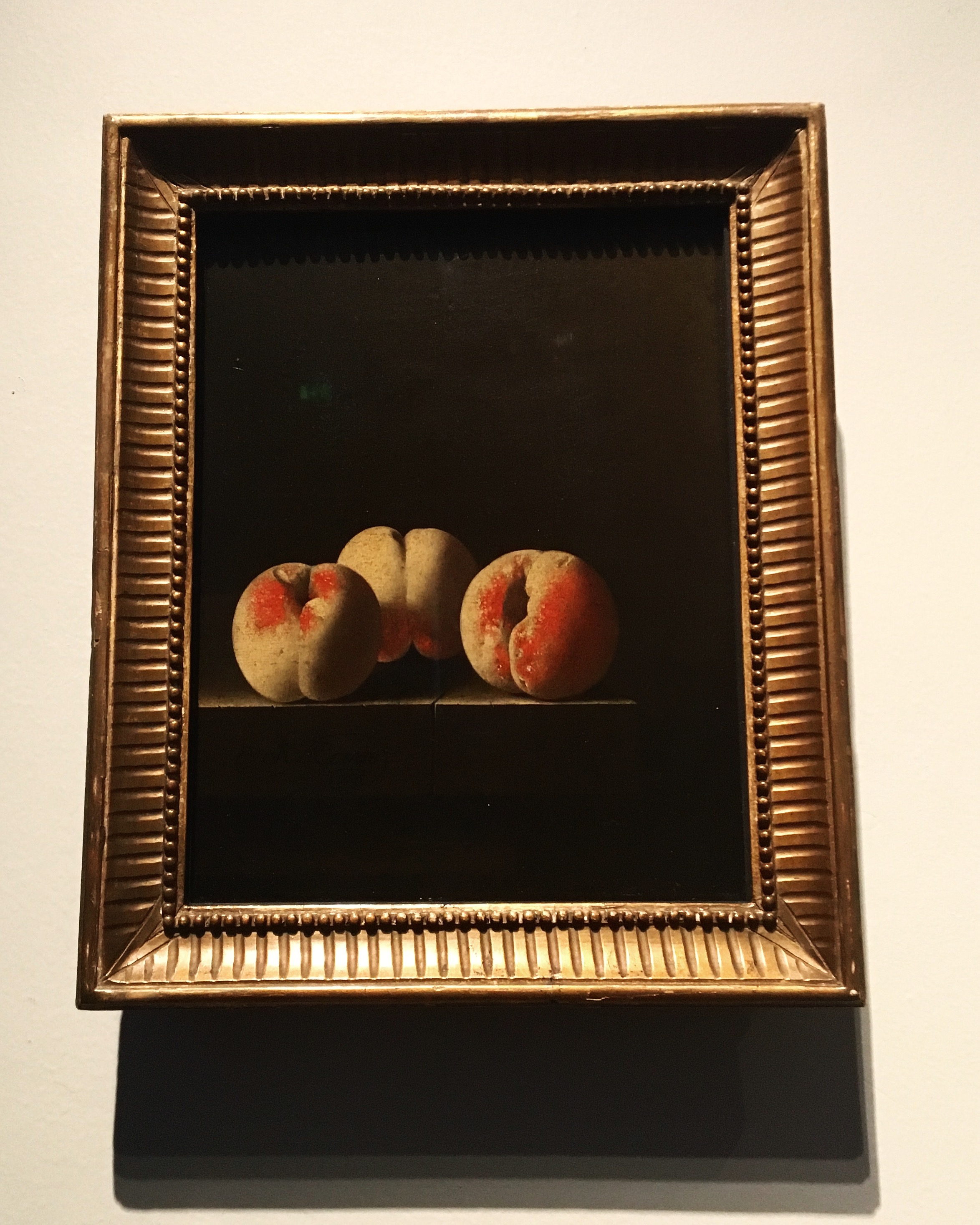
Coorte’s method is interesting in that he painted with oil on paper that was glued to a wooden panel. His choice in still-life subjects was consistently simple when compared to his contemporaries’ often elaborate and ostentatious still-life renderings of bountiful cornucopias and bouquets.
When I first encountered this series by Coorte, I quietly read the descriptions, snapped some photographs, and promptly descended down the palatial staircases to a tucked away coffee kiosk on the ground floor. There I sat with good cup of koffie, and researched this new (to me) Dutch painter. I was intrigued to discover that he was (and to a certain degree, still is) somewhat of a mystery. Little is known about the man, and during his lifetime he never achieved great fame or popularity. He was all but forgotten over the centuries until a Dutch art historian by the name of Laurens J. Bol brought his name and works back to life with an article written in 1952, followed by a catalogue of his known works in 1977. This 20th century reevaluation and appraisal thrusted Coorte into the spotlight, and he was soon enough heralded by art critics and historians as one of the greatest still-life painters of the Dutch Golden Age. So popular, in fact, that eventually in 2003, a special exhibition of these still-life paintings (including the four I saw today) was curated and displayed in Washington D.C. at the National Gallery of Art. In 2009, newly discovered and appreciated works were sold at auction for ten times their expected price (we’re talking millions of euros). With my curiosity satisfied, I simply couldn’t resist climbing back up the staircases to study the paintings again, only this time with background and context. It’s amazing how a little bit of investigation can make something like a small painting of seashells become something more – more beautiful, more special – or perhaps simply better understood and appreciated. I feel that’s more or less my goal here in Amsterdam – whether it’s a grand museum or the canal closest to my home – to learn, to understand, and then to revel in the presence of history and art.
***
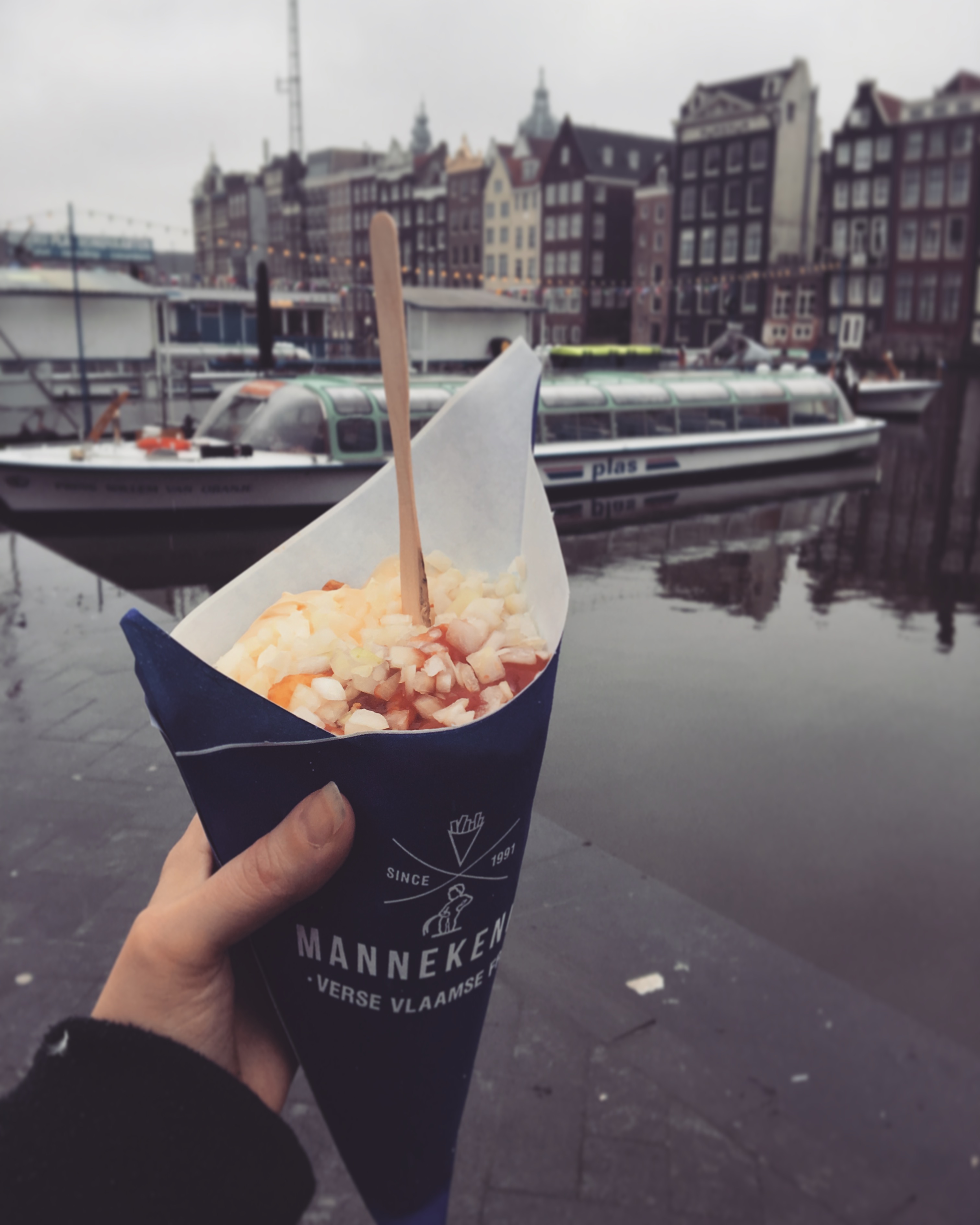
I was so hungry when I left the museum that I walked all the way to the city center to buy myself some patatje speciaal (special fries!): hot & salted friets topped with a specialty combo of ketchup, mayo, and diced raw onions – always served with a mini, wooden fork.
 Allyson Abroad